Human Resource Management: Concepts and Examples
Dr. Rakesh Verma, Prof. Amitabha Gupta
Paperback
• inr 495.00
• English
• 9788119079995
No ratings yet
| Publisher | Bharti Publications |
|---|---|
| Brand/Group | Bharti Publications |
| ISBN13 | 9788119079995 |
| ASIN/SKU | 8119079995 |
| Book Format | Paperback |
| Language | English |
| List Price | inr 495.00 |
| Publishing Date | 18/08/2023 |
| Book Code | BD00069604 |
Buy this Book
Amazon Stores
Ebook Stores
Other Stores
Discover Human Resource Management: Concepts and Examples by Dr. Rakesh Verma. This book is published by Bharti Publications in Paperback format, ISBN 9788119079995, ASIN 8119079995, under Human Resources, Management.
Book Description
This book, “Human Resource Management: Concept`s and Examples,” aims to unravel the intricacies of HRM while providing real-world scenarios to illustrate its practical application. In this comprehensive volume, authors embark upon a guided tour of the various dimensions that constitute the realm of HRM. From the foundational insights into the essentials of HRM to the cutting-edge challenges posed by technology and globalization, each chapter serves as a compass to navigate the diverse terrains of HRM landscape.
Author Biography
Dr. Rakesh Verma is an Associate Professor at GNIOT MBA Institute. He has 11 years of academic & research experience and 22 years of corporate experience. He has Ph.D. in Management, MBA in Finance & IT from MTU Noida (AKTU, Lucknow), Enterprise Management from IIT Delhi, RMTW from CCS University, DBA from IMT Ghaziabad, ADPMIR from CCS University, and Licentiate of Insurance Institute of India. He is the author of seven books and has five patents. He has Research Papers and Book Chapters published in IEEE Scopus, Springer Scopus, UGC Care Journals, and in International Journals. He is an Editor & reviewer in AJEBA & AJEFM Journal.
Dr. Palak Khandelwal, an Assistant Professor at Institute of Management studies SAGE University Indore, possesses a diverse background with degrees in B Tech and Management. Her passion lies in Human Resource Management, particularly in the area of Training and Development, where she completed her doctoral research. With an impressive track record, she has published her research findings in esteemed journals, showcasing her expertise and dedication to the field. Dr. Khandelwal'sacademic journey reflects her commitment to advancing HR practices and contributing valuable insights to the scholarly community.
Prof. Sarika Malhotra With extensive HRM teaching experience, Prof. Sarika Malhotra blends practical insights and academic rigor from her HR leadership and academic career. Holding a Master's in Psychology and HRM, specializing in practices and motivation, and a Counseling Diploma, she pursues a Ph.D. topic is Transformational Leadership & Innovative Work Behavior to explore Human Behavior. Interested in Change Management, HR Analytics, Leadership, and Organizational Behavior, she's held key roles in Delhi-NCR colleges, mentoring HR aspirants. Her research on Leadership, HRM tech, Crisis Management, and Innovation is published in journals.
Dr. Ankit Garg is an assistant professor at Ajay Kumar Garg Institute of Management in Ghaziabad. With over 12 years of teaching and research experience. Dr. Garg holds a Ph.D. in Marketing, Master's degrees in Business Administration and Commerce and Bachelor's degree in Engineering from Dr. APJ Abdul Kalam University in Lucknow. In addition to his academic qualifications, Dr. Garg has acquired several professional certificates from IBM and Google to enhance his expertise.
Prof. Amitabha Gupta is the Head of the Department of Business Administration at Swami Vivekananda Institute of Science and Technology, an AICTE-approved and NAAC-accredited institution. With an ongoing PhD in Management, he holds an MBA in HRM, a PG in HR Analytics from IIM R, and a BCOM in Advertising and Sales Promotion. He boasts 8 years of corporate experience with esteemed companies like Indian Railways, GENPCT, Novartis Pharmaceuticals, RTIICS, and others, along with over 15 years of teaching and academic administration expertise in ICFAI, JIS Group, and Swami Vivekananda Group.
Dr. Palak Khandelwal, an Assistant Professor at Institute of Management studies SAGE University Indore, possesses a diverse background with degrees in B Tech and Management. Her passion lies in Human Resource Management, particularly in the area of Training and Development, where she completed her doctoral research. With an impressive track record, she has published her research findings in esteemed journals, showcasing her expertise and dedication to the field. Dr. Khandelwal'sacademic journey reflects her commitment to advancing HR practices and contributing valuable insights to the scholarly community.
Prof. Sarika Malhotra With extensive HRM teaching experience, Prof. Sarika Malhotra blends practical insights and academic rigor from her HR leadership and academic career. Holding a Master's in Psychology and HRM, specializing in practices and motivation, and a Counseling Diploma, she pursues a Ph.D. topic is Transformational Leadership & Innovative Work Behavior to explore Human Behavior. Interested in Change Management, HR Analytics, Leadership, and Organizational Behavior, she's held key roles in Delhi-NCR colleges, mentoring HR aspirants. Her research on Leadership, HRM tech, Crisis Management, and Innovation is published in journals.
Dr. Ankit Garg is an assistant professor at Ajay Kumar Garg Institute of Management in Ghaziabad. With over 12 years of teaching and research experience. Dr. Garg holds a Ph.D. in Marketing, Master's degrees in Business Administration and Commerce and Bachelor's degree in Engineering from Dr. APJ Abdul Kalam University in Lucknow. In addition to his academic qualifications, Dr. Garg has acquired several professional certificates from IBM and Google to enhance his expertise.
Prof. Amitabha Gupta is the Head of the Department of Business Administration at Swami Vivekananda Institute of Science and Technology, an AICTE-approved and NAAC-accredited institution. With an ongoing PhD in Management, he holds an MBA in HRM, a PG in HR Analytics from IIM R, and a BCOM in Advertising and Sales Promotion. He boasts 8 years of corporate experience with esteemed companies like Indian Railways, GENPCT, Novartis Pharmaceuticals, RTIICS, and others, along with over 15 years of teaching and academic administration expertise in ICFAI, JIS Group, and Swami Vivekananda Group.
Editorial Reviews
Editorial Reviews will be added soon…
Book Summary
Book Summary
Human Resource Management: Concepts and Examples is a comprehensive guide that explores the principles, practices, and emerging trends in the field of Human Resource Management (HRM). Designed to bridge the gap between theory and practice, the book presents fundamental HR concepts alongside practical examples and real-world scenarios, enabling readers to understand how human resource strategies contribute to organizational success. It serves as an essential resource for students, educators, HR professionals, managers, entrepreneurs, and anyone interested in understanding the evolving role of human resource management in modern organizations.
The book begins by introducing the concept, nature, objectives, and significance of Human Resource Management. It explains how HRM has evolved from a traditional personnel management function into a strategic business partner that plays a vital role in achieving organizational goals. The authors discuss the importance of managing human capital effectively, emphasizing that employees are valuable assets whose knowledge, skills, creativity, and commitment determine an organization's long-term growth and competitiveness.
One of the distinguishing features of the book is its practical approach to learning. Each concept is supported by relevant examples, illustrations, and workplace scenarios that demonstrate how HR principles operate in real organizational settings. These examples help readers understand complex HR functions more clearly while encouraging them to apply theoretical knowledge to practical situations. By combining conceptual discussions with case-based learning, the book creates an engaging and application-oriented learning experience.
The text provides a detailed examination of the major functions of Human Resource Management. It discusses human resource planning, recruitment, selection, placement, induction, training, and development, explaining how organizations identify, attract, and retain talented employees. The book highlights the importance of systematic workforce planning and effective recruitment strategies in building a competent and motivated workforce capable of meeting organizational objectives.
Performance management forms another significant area of discussion. The authors explain various methods of performance appraisal, employee evaluation, feedback systems, and performance improvement strategies. The book emphasizes that effective performance management not only measures employee contributions but also promotes continuous learning, professional growth, and organizational excellence. It also explores the relationship between performance evaluation, career development, promotions, rewards, and employee motivation.
Compensation and reward management are discussed in detail, covering salary structures, incentives, bonuses, employee benefits, and recognition programmes. The book explains how fair and competitive compensation systems contribute to employee satisfaction, productivity, and retention. It also examines various motivational theories and demonstrates how organizations can create a positive work environment through financial and non-financial rewards.
Employee relations and labour management receive considerable attention throughout the book. The authors discuss communication, teamwork, grievance handling, conflict resolution, collective bargaining, industrial relations, and workplace discipline. They highlight the importance of maintaining harmonious employer-employee relationships and creating an organizational culture based on trust, collaboration, diversity, and mutual respect. The book also examines the role of leadership and organizational behaviour in fostering employee engagement and improving workplace performance.
Recognizing the rapidly changing business environment, the book explores the impact of technology and digital transformation on Human Resource Management. It discusses Human Resource Information Systems (HRIS), artificial intelligence, data analytics, automation, virtual recruitment, online training platforms, and digital performance management systems. The authors explain how technological innovations are reshaping HR functions by improving efficiency, enhancing decision-making, and enabling organizations to manage geographically dispersed workforces more effectively.
Globalization is another important theme addressed in the book. As businesses increasingly operate across national boundaries, HR professionals face new challenges related to cultural diversity, international workforce management, global leadership, expatriate management, and cross-cultural communication. The book provides valuable insights into managing human resources in multinational organizations while highlighting the importance of inclusive workplace practices and ethical leadership in a global business environment.
The authors also discuss contemporary issues such as talent management, employee engagement, work-life balance, organizational culture, diversity and inclusion, corporate social responsibility, emotional intelligence, and employee well-being. These topics reflect the expanding scope of Human Resource Management beyond administrative functions, emphasizing its strategic contribution to innovation, organizational resilience, and sustainable business growth.
Legal and ethical dimensions of HRM are also examined, helping readers understand the importance of complying with labour laws, employment regulations, workplace safety standards, and ethical business practices. The book highlights the responsibilities of HR professionals in ensuring fairness, equality, transparency, and accountability in all employment-related decisions while protecting employee rights and organizational integrity.
Throughout the text, practical examples, discussion questions, and applied illustrations encourage readers to develop analytical and problem-solving skills. These features make the book particularly useful for classroom learning, professional training, competitive examinations, and self-study. The accessible language and systematic presentation of topics ensure that both beginners and advanced learners can easily grasp the concepts and apply them in real-life organizational contexts.
Overall, Human Resource Management: Concepts and Examples offers a balanced blend of theoretical knowledge and practical application, providing readers with a comprehensive understanding of modern HR practices. By addressing both traditional HR functions and emerging challenges posed by technology, globalization, and changing workforce expectations, the book prepares readers to manage human resources effectively in dynamic organizational environments. It serves as a valuable reference for building competent HR professionals capable of contributing to organizational success through strategic people management, ethical leadership, and continuous innovation.
Human Resource Management: Concepts and Examples is a comprehensive guide that explores the principles, practices, and emerging trends in the field of Human Resource Management (HRM). Designed to bridge the gap between theory and practice, the book presents fundamental HR concepts alongside practical examples and real-world scenarios, enabling readers to understand how human resource strategies contribute to organizational success. It serves as an essential resource for students, educators, HR professionals, managers, entrepreneurs, and anyone interested in understanding the evolving role of human resource management in modern organizations.
The book begins by introducing the concept, nature, objectives, and significance of Human Resource Management. It explains how HRM has evolved from a traditional personnel management function into a strategic business partner that plays a vital role in achieving organizational goals. The authors discuss the importance of managing human capital effectively, emphasizing that employees are valuable assets whose knowledge, skills, creativity, and commitment determine an organization's long-term growth and competitiveness.
One of the distinguishing features of the book is its practical approach to learning. Each concept is supported by relevant examples, illustrations, and workplace scenarios that demonstrate how HR principles operate in real organizational settings. These examples help readers understand complex HR functions more clearly while encouraging them to apply theoretical knowledge to practical situations. By combining conceptual discussions with case-based learning, the book creates an engaging and application-oriented learning experience.
The text provides a detailed examination of the major functions of Human Resource Management. It discusses human resource planning, recruitment, selection, placement, induction, training, and development, explaining how organizations identify, attract, and retain talented employees. The book highlights the importance of systematic workforce planning and effective recruitment strategies in building a competent and motivated workforce capable of meeting organizational objectives.
Performance management forms another significant area of discussion. The authors explain various methods of performance appraisal, employee evaluation, feedback systems, and performance improvement strategies. The book emphasizes that effective performance management not only measures employee contributions but also promotes continuous learning, professional growth, and organizational excellence. It also explores the relationship between performance evaluation, career development, promotions, rewards, and employee motivation.
Compensation and reward management are discussed in detail, covering salary structures, incentives, bonuses, employee benefits, and recognition programmes. The book explains how fair and competitive compensation systems contribute to employee satisfaction, productivity, and retention. It also examines various motivational theories and demonstrates how organizations can create a positive work environment through financial and non-financial rewards.
Employee relations and labour management receive considerable attention throughout the book. The authors discuss communication, teamwork, grievance handling, conflict resolution, collective bargaining, industrial relations, and workplace discipline. They highlight the importance of maintaining harmonious employer-employee relationships and creating an organizational culture based on trust, collaboration, diversity, and mutual respect. The book also examines the role of leadership and organizational behaviour in fostering employee engagement and improving workplace performance.
Recognizing the rapidly changing business environment, the book explores the impact of technology and digital transformation on Human Resource Management. It discusses Human Resource Information Systems (HRIS), artificial intelligence, data analytics, automation, virtual recruitment, online training platforms, and digital performance management systems. The authors explain how technological innovations are reshaping HR functions by improving efficiency, enhancing decision-making, and enabling organizations to manage geographically dispersed workforces more effectively.
Globalization is another important theme addressed in the book. As businesses increasingly operate across national boundaries, HR professionals face new challenges related to cultural diversity, international workforce management, global leadership, expatriate management, and cross-cultural communication. The book provides valuable insights into managing human resources in multinational organizations while highlighting the importance of inclusive workplace practices and ethical leadership in a global business environment.
The authors also discuss contemporary issues such as talent management, employee engagement, work-life balance, organizational culture, diversity and inclusion, corporate social responsibility, emotional intelligence, and employee well-being. These topics reflect the expanding scope of Human Resource Management beyond administrative functions, emphasizing its strategic contribution to innovation, organizational resilience, and sustainable business growth.
Legal and ethical dimensions of HRM are also examined, helping readers understand the importance of complying with labour laws, employment regulations, workplace safety standards, and ethical business practices. The book highlights the responsibilities of HR professionals in ensuring fairness, equality, transparency, and accountability in all employment-related decisions while protecting employee rights and organizational integrity.
Throughout the text, practical examples, discussion questions, and applied illustrations encourage readers to develop analytical and problem-solving skills. These features make the book particularly useful for classroom learning, professional training, competitive examinations, and self-study. The accessible language and systematic presentation of topics ensure that both beginners and advanced learners can easily grasp the concepts and apply them in real-life organizational contexts.
Overall, Human Resource Management: Concepts and Examples offers a balanced blend of theoretical knowledge and practical application, providing readers with a comprehensive understanding of modern HR practices. By addressing both traditional HR functions and emerging challenges posed by technology, globalization, and changing workforce expectations, the book prepares readers to manage human resources effectively in dynamic organizational environments. It serves as a valuable reference for building competent HR professionals capable of contributing to organizational success through strategic people management, ethical leadership, and continuous innovation.
Sample Chapters
Sample Chapters will be added soon…
Reader Reviews
No reviews yet.
Human Resource Management: Concepts and Examples
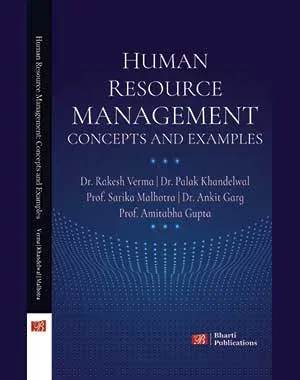
Download Cover Image
Do you want to download the full cover image for Human Resource Management: Concepts and Examples?