
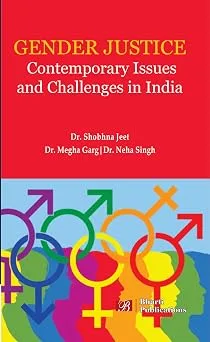
Gender Justice in India: Contemporary Issues and Challenges
Dr. Shobhna Jeet, Dr. Megha Garg
Hardcover
• 244 Pages
• inr 885.00
• English
• 9788119079094
No ratings yet
| Publisher | Bharti Publications |
|---|---|
| Brand/Group | Bharti Publications |
| ISBN13 | 9788119079094 |
| ASIN/SKU | 8119079094 |
| Book Format | Hardcover |
| Language | English |
| Pages | 244 |
| List Price | inr 885.00 |
| Publishing Date | 06/03/2023 |
| Dimensions | 14.75 x 2.5 x 21.5 |
| Weight | 450 |
| Book Code | BD00070074 |
Buy this Book
Amazon Stores
Ebook Stores
Other Stores
Discover Gender Justice in India: Contemporary Issues and Challenges by Dr. Shobhna Jeet. This book is published by Bharti Publications in Hardcover format, ISBN 9788119079094, ASIN 8119079094.
Book Description
The topic of gender justice is explored in depth in the book "Gender justice: contemporary issues and challenges in India," which focuses on a variety of gender justice-related topics in the setting of India. The difficulties that women community experience in obtaining their rights and being treated equally in various aspects of society are examined in this work. This book intends to shed light on the current state of gender justice in India and provide insights into the modern difficulties faced by marginalised groups. The book's target audience is India.
Author Biography
Author Biography will be added soon…
Editorial Reviews
Editorial Reviews will be added soon…
Book Summary
Gender Justice: Contemporary Issues and Challenges in India offers a comprehensive examination of gender justice in the contemporary Indian context. The book explores the complex social, economic, cultural, legal, and institutional factors that continue to shape gender relations and influence the rights, opportunities, and dignity of individuals across society. With a particular focus on the experiences of women and other marginalised groups, it highlights the persistent inequalities that hinder the achievement of genuine gender equality.
Despite significant constitutional safeguards, legislative reforms, educational progress, and growing public awareness, gender-based inequalities continue to exist in various forms. The book examines these realities by addressing contemporary issues surrounding women's rights, equal opportunities, social participation, access to education and employment, economic empowerment, political representation, and protection from discrimination and violence. It also considers the gap that often exists between legal provisions and their effective implementation in everyday life.
A central concern of the book is the recognition that gender justice cannot be achieved through legal reforms alone. Social attitudes, cultural practices, institutional structures, economic inequalities, and deeply rooted stereotypes can continue to reinforce discrimination. The book therefore encourages a broader understanding of gender justice that goes beyond formal equality and focuses on creating an inclusive environment in which individuals can exercise their rights and participate meaningfully in social, economic, and political life.
The book also brings attention to the challenges faced by marginalised and vulnerable communities, recognising that experiences of inequality can differ according to social and economic circumstances. By examining these intersecting dimensions, it seeks to provide a more nuanced understanding of the barriers that prevent equitable development and social inclusion.
Gender Justice: Contemporary Issues and Challenges in India is intended to encourage critical reflection on the progress India has made and the challenges that remain. It highlights the importance of effective policies, institutional accountability, social awareness, education, and collective action in advancing gender equality. The book provides valuable insights for understanding contemporary debates on gender justice while emphasising the need for sustained efforts to build a fairer and more inclusive society.
Written for students, researchers, academics, policymakers, professionals, and readers interested in gender studies and contemporary Indian society, this book serves as a useful resource for understanding the evolving landscape of gender justice in India. It ultimately underscores that gender justice is not merely a women's issue but a fundamental requirement for equality, human dignity, social progress, and sustainable national development.
Despite significant constitutional safeguards, legislative reforms, educational progress, and growing public awareness, gender-based inequalities continue to exist in various forms. The book examines these realities by addressing contemporary issues surrounding women's rights, equal opportunities, social participation, access to education and employment, economic empowerment, political representation, and protection from discrimination and violence. It also considers the gap that often exists between legal provisions and their effective implementation in everyday life.
A central concern of the book is the recognition that gender justice cannot be achieved through legal reforms alone. Social attitudes, cultural practices, institutional structures, economic inequalities, and deeply rooted stereotypes can continue to reinforce discrimination. The book therefore encourages a broader understanding of gender justice that goes beyond formal equality and focuses on creating an inclusive environment in which individuals can exercise their rights and participate meaningfully in social, economic, and political life.
The book also brings attention to the challenges faced by marginalised and vulnerable communities, recognising that experiences of inequality can differ according to social and economic circumstances. By examining these intersecting dimensions, it seeks to provide a more nuanced understanding of the barriers that prevent equitable development and social inclusion.
Gender Justice: Contemporary Issues and Challenges in India is intended to encourage critical reflection on the progress India has made and the challenges that remain. It highlights the importance of effective policies, institutional accountability, social awareness, education, and collective action in advancing gender equality. The book provides valuable insights for understanding contemporary debates on gender justice while emphasising the need for sustained efforts to build a fairer and more inclusive society.
Written for students, researchers, academics, policymakers, professionals, and readers interested in gender studies and contemporary Indian society, this book serves as a useful resource for understanding the evolving landscape of gender justice in India. It ultimately underscores that gender justice is not merely a women's issue but a fundamental requirement for equality, human dignity, social progress, and sustainable national development.
Sample Chapters
Sample Chapters will be added soon…
Reader Reviews
No reviews yet.
Gender Justice in India: Contemporary Issues and Challenges
Download Cover Image
Do you want to download the full cover image for Gender Justice in India: Contemporary Issues and Challenges?