
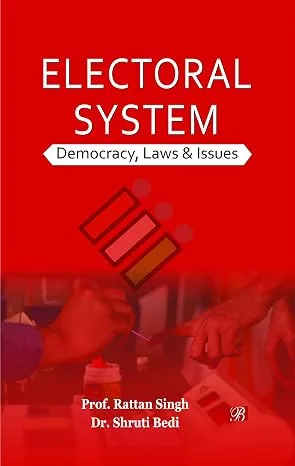
Electoral System: Democracy, Laws & Issue
Prof. Rattan Singh, Dr. Shruti Bedi
Hardcover
• inr 880.00
• English
• 9789389657043
No ratings yet
| Publisher | Bharti Publications |
|---|---|
| Brand/Group | Bharti Publications |
| ISBN13 | 9789389657043 |
| ASIN/SKU | 9389657040 |
| Book Format | Hardcover |
| Language | English |
| List Price | inr 880.00 |
| Publishing Date | 01/01/2019 |
| Dimensions | 18 x 2 x 21 |
| Weight | 300 |
| Book Code | BD00070084 |
Buy this Book
Amazon Stores
Ebook Stores
Other Stores
Discover Electoral System: Democracy, Laws and Issue by Prof. Rattan Singh. This book is published by Bharti Publications in Hardcover format, ISBN 9789389657043, ASIN 9389657040.
Book Description
A democracy is meaningless without the possibility of free and fair elections. The Electoral System of any country sets the stage for the further development of the nation and the availability of the fundamental freedoms to the people. A parliamentary democracy flourishes under a transparent and strong system of conducting elections. This book deals with the issues and challenges of the Indian Electoral System. It carries inputs from various academicians and professionals discussing the different features and the issues surrounding this system, including the challenges of election manifestos; participation of citizens; electronic voting; electoral rolls; the 10th Schedule; exit and opinion polls; electoral reforms; responsibilities of social media; political and constitutional issues; right to vote for the intellectually disabled; women representation; and residency requirements. The book will be of relevance to a wide audience as it deals with both the social and legal aspects of the Electoral System in India. It is a reference book which opens the doors for a deeper research on the subject and would be useful for lawyers, legislators, academics, political leaders, policymakers and students.
Author Biography
Prof. Rattan Singh, Professor and Director, University Institute of Legal Studies, Chief Vigilance Officer, Panjab University. He is Former Head, Department of Laws, Guru Nanak Dev University, Amritsar and Former Associate Dean Student Welfare, Panjab University. His areas of specialisation include Constitutional Law, Research Methodology and Administrative Law. He has edited two books on Socio Economic Offences and Legal Research Methodology and co-authored a book on Admissibility of Scientific Evidence.
Dr. Shruti Bedi, Associate Professor of Law, University
Institute of Legal Studies and Co-ordinator, IAS Centre, Panjab University. A gold medallist for & consecutive years, her areas of research focus on constitutional law, internal security law and organised crime. Her numerous publications include the books: Terrorism: Our World and Our Laws and Indian Counter Terrorism Law. She is visiting faculty at Nottingham Law School, Nottingham Trent University, UK and has delivered vered a TEDx talk on & quot; Justice: The First Promise
Dr. Shruti Bedi, Associate Professor of Law, University
Institute of Legal Studies and Co-ordinator, IAS Centre, Panjab University. A gold medallist for & consecutive years, her areas of research focus on constitutional law, internal security law and organised crime. Her numerous publications include the books: Terrorism: Our World and Our Laws and Indian Counter Terrorism Law. She is visiting faculty at Nottingham Law School, Nottingham Trent University, UK and has delivered vered a TEDx talk on & quot; Justice: The First Promise
Editorial Reviews
Editorial Reviews will be added soon…
Book Summary
A democracy derives its strength from the ability of citizens to freely and fairly choose their representatives. In this context, the electoral system forms one of the most fundamental pillars of a democratic state. The integrity, transparency, inclusiveness, and effectiveness of elections have a direct bearing on the functioning of parliamentary democracy and the protection of citizens' constitutional rights and freedoms.
Electoral System in India: Issues and Challenges provides a comprehensive examination of the Indian electoral system and the contemporary issues surrounding the conduct and regulation of elections. Bringing together perspectives from academicians, legal experts, and professionals, the book explores the electoral process from social, political, constitutional, and legal viewpoints.
The book examines a wide range of subjects that are central to India's electoral democracy. These include the challenges associated with election manifestos, citizen participation, electronic voting, electoral rolls, the Tenth Schedule, exit polls and opinion polls, electoral reforms, political and constitutional issues, women's representation, residency requirements, and the right to vote of persons with intellectual disabilities. It also considers the evolving responsibilities of social media in the electoral process and the opportunities and challenges created by the increasing influence of digital communication.
A major strength of the book is its multidisciplinary approach. Elections are not simply a constitutional or legal exercise; they are also deeply connected with society, political behaviour, technology, public participation, and democratic culture. The contributions in this volume therefore examine the electoral system from multiple perspectives, allowing readers to understand both the formal legal framework and the practical challenges faced by Indian democracy.
The book also draws attention to the need for continuous electoral reforms. As Indian society, technology, political communication, and voter expectations continue to evolve, electoral institutions must respond to emerging challenges while maintaining the core principles of fairness, transparency, accountability, and inclusiveness. Questions surrounding electronic voting, electoral information, political campaigning, opinion polling, social media, and voter participation have become increasingly important in contemporary electoral discourse.
Issues of representation and participation receive particular attention. The book explores the participation of citizens in the democratic process and considers questions relating to the representation of women and the voting rights of persons with disabilities. Such discussions are important for strengthening the principle that democracy should provide meaningful political participation to all sections of society.
At the same time, the book addresses constitutional and legal questions that influence the functioning of India's electoral framework. By bringing together diverse scholarly perspectives, it encourages readers to critically examine existing practices and consider possible approaches to strengthening India's electoral institutions.
Electoral System in India: Issues and Challenges is intended as a valuable reference work for lawyers, legislators, academicians, political leaders, policymakers, researchers, political science and law students, and anyone interested in Indian democracy and electoral governance. It provides a foundation for understanding the complex relationship between law, politics, technology, and society within the electoral process.
More than a discussion of elections alone, this book opens the door to deeper research and debate on the future of democratic participation in India. It highlights the importance of ensuring that electoral processes remain accessible, transparent, credible, and responsive to the changing needs of citizens.
Ultimately, the book reinforces a fundamental principle: a vibrant democracy requires not merely elections, but elections that inspire public confidence, protect democratic rights, and provide every eligible citizen with a meaningful opportunity to participate in the governance of the nation.
Electoral System in India: Issues and Challenges provides a comprehensive examination of the Indian electoral system and the contemporary issues surrounding the conduct and regulation of elections. Bringing together perspectives from academicians, legal experts, and professionals, the book explores the electoral process from social, political, constitutional, and legal viewpoints.
The book examines a wide range of subjects that are central to India's electoral democracy. These include the challenges associated with election manifestos, citizen participation, electronic voting, electoral rolls, the Tenth Schedule, exit polls and opinion polls, electoral reforms, political and constitutional issues, women's representation, residency requirements, and the right to vote of persons with intellectual disabilities. It also considers the evolving responsibilities of social media in the electoral process and the opportunities and challenges created by the increasing influence of digital communication.
A major strength of the book is its multidisciplinary approach. Elections are not simply a constitutional or legal exercise; they are also deeply connected with society, political behaviour, technology, public participation, and democratic culture. The contributions in this volume therefore examine the electoral system from multiple perspectives, allowing readers to understand both the formal legal framework and the practical challenges faced by Indian democracy.
The book also draws attention to the need for continuous electoral reforms. As Indian society, technology, political communication, and voter expectations continue to evolve, electoral institutions must respond to emerging challenges while maintaining the core principles of fairness, transparency, accountability, and inclusiveness. Questions surrounding electronic voting, electoral information, political campaigning, opinion polling, social media, and voter participation have become increasingly important in contemporary electoral discourse.
Issues of representation and participation receive particular attention. The book explores the participation of citizens in the democratic process and considers questions relating to the representation of women and the voting rights of persons with disabilities. Such discussions are important for strengthening the principle that democracy should provide meaningful political participation to all sections of society.
At the same time, the book addresses constitutional and legal questions that influence the functioning of India's electoral framework. By bringing together diverse scholarly perspectives, it encourages readers to critically examine existing practices and consider possible approaches to strengthening India's electoral institutions.
Electoral System in India: Issues and Challenges is intended as a valuable reference work for lawyers, legislators, academicians, political leaders, policymakers, researchers, political science and law students, and anyone interested in Indian democracy and electoral governance. It provides a foundation for understanding the complex relationship between law, politics, technology, and society within the electoral process.
More than a discussion of elections alone, this book opens the door to deeper research and debate on the future of democratic participation in India. It highlights the importance of ensuring that electoral processes remain accessible, transparent, credible, and responsive to the changing needs of citizens.
Ultimately, the book reinforces a fundamental principle: a vibrant democracy requires not merely elections, but elections that inspire public confidence, protect democratic rights, and provide every eligible citizen with a meaningful opportunity to participate in the governance of the nation.
Sample Chapters
Sample Chapters will be added soon…
Reader Reviews
No reviews yet.
Electoral System: Democracy, Laws & Issue
Download Cover Image
Do you want to download the full cover image for Electoral System: Democracy, Laws & Issue?