
Credit Risk Management Practices of Commercial Banks in India: An Empirical Study
Hardcover
• 143 Pages
• inr 580.00
• English
• 9789394779334
No ratings yet
| Publisher | Bharti Publications |
|---|---|
| Brand/Group | Bharti Publications |
| ISBN13 | 9789394779334 |
| ASIN/SKU | 9394779337 |
| Book Format | Hardcover |
| Language | English |
| Pages | 143 |
| List Price | inr 580.00 |
| Publishing Date | 17/08/2022 |
| Dimensions | 14.5 x 2.25 x 21.5 |
| Weight | 350 |
| Book Code | BD00070116 |
Buy this Book
Amazon Stores
Ebook Stores
Other Stores
Discover Credit Risk Management Practices of Commercial Banks in India: An Empirical Study by Dr. Ramanjeet Kaur. This book is published by Bharti Publications in Hardcover format, ISBN 9789394779334, ASIN 9394779337.
Book Description
Credit risk is the risk of default on a debt when a borrower failing to make required payment. In the credit risk the lender bear the principal and interest amount. This loss may be complete or partial. There are number of causes for the credit risk like customer may fail to make a payment and government grants bankruptcy protection to an insolvent business. The effective management of credit risk is a critical component of a comprehensive approach to risk management and important to the long-term success of any banking organization. Effective credit risk management process is a way to manage portfolio of credit facilities. Credit risk management encompasses identification, measurement, monitoring and control of the credit risk exposures. This study is divided into two parts (1) To analyze and compare the financial performance of selected Private and Public sector Banks and (2) To identifying the factors contributing to Credit Risk Management and its impact on performance of selected Public and Private Sector Banks in India.
Author Biography
Dr. Ramanjeet Kaur is working as a assistant professor in department of business management and commerce, Desh Bhagat university, Mandi Gobindgarh. She had completed her Bachelors Degree from Punjab University Chandigarh, Masters Degree in Commerce from Punjabi University,Patiala and Ph.d from guru Kashi university, Bathinda. Her national and international research papers published in various reputed journals like ugc care etc. She have been attended 11 international and national conference and presented papers in various seminars.
Editorial Reviews
Editorial Reviews will be added soon…
Book Summary
Credit Risk Management in Indian Banking provides a comprehensive examination of credit risk and its significance in the performance and long-term stability of banking institutions. Credit risk represents the possibility that a borrower may fail to meet the required repayment obligations, resulting in financial losses for the lending institution. Since banks operate by extending credit to individuals, businesses, and other entities, effective management of credit risk remains one of the most important components of sound banking and financial management.
The consequences of credit risk can range from partial to substantial losses of principal and interest. Borrowers may default for a variety of reasons, including financial distress, deteriorating business conditions, inability to generate sufficient cash flows, or insolvency. In certain situations, legal or regulatory provisions may also provide protection to financially distressed borrowers, further complicating the recovery process for lenders. These challenges make the identification, assessment, monitoring, and control of credit risk essential to maintaining the financial health of banking institutions.
This book examines the principles and practices of credit risk management within the Indian banking sector, with particular emphasis on the comparative performance of selected Public Sector Banks and Private Sector Banks. It seeks to provide an understanding of how credit risk influences the financial performance of banks and how effective risk management practices can contribute to institutional stability and profitability.
An important focus of the study is the systematic management of credit exposures. Effective credit risk management involves several interconnected processes, including the identification, measurement, monitoring, and control of credit risk. These processes enable banks to evaluate the creditworthiness of borrowers, assess potential losses, monitor existing credit portfolios, and implement appropriate measures to minimise exposure to default.
The study is broadly divided into two major parts. The first part focuses on analysing and comparing the financial performance of selected Public and Private Sector Banks in India. Through comparative analysis, it seeks to understand differences in financial performance and the factors that influence the operational and financial outcomes of banking institutions.
The second part focuses specifically on identifying the factors contributing to Credit Risk Management and examining their impact on the performance of selected Public and Private Sector Banks in India. This part provides a deeper understanding of the relationship between credit risk management practices and banking performance, highlighting the importance of sound risk assessment and control mechanisms.
By combining financial performance analysis with an examination of credit risk management practices, the book provides a comprehensive perspective on one of the most important challenges facing modern banking institutions. It also highlights the need for banks to develop effective systems that can identify emerging risks at an early stage and respond appropriately to changing economic and financial conditions.
The book will be useful for banking professionals, financial analysts, researchers, academicians, policymakers, management students, commerce and finance students, and anyone interested in banking risk management and financial performance. It can also serve as a valuable reference for understanding the relationship between credit risk, risk management practices, and the financial health of Indian banks.
Ultimately, the book emphasises that effective credit risk management is not merely a defensive mechanism against loan losses; it is a strategic component of sustainable banking. Strong systems for assessing, monitoring, and controlling credit risk can help banks protect their assets, improve financial performance, strengthen resilience, and support long-term growth in an increasingly complex financial environment.
The consequences of credit risk can range from partial to substantial losses of principal and interest. Borrowers may default for a variety of reasons, including financial distress, deteriorating business conditions, inability to generate sufficient cash flows, or insolvency. In certain situations, legal or regulatory provisions may also provide protection to financially distressed borrowers, further complicating the recovery process for lenders. These challenges make the identification, assessment, monitoring, and control of credit risk essential to maintaining the financial health of banking institutions.
This book examines the principles and practices of credit risk management within the Indian banking sector, with particular emphasis on the comparative performance of selected Public Sector Banks and Private Sector Banks. It seeks to provide an understanding of how credit risk influences the financial performance of banks and how effective risk management practices can contribute to institutional stability and profitability.
An important focus of the study is the systematic management of credit exposures. Effective credit risk management involves several interconnected processes, including the identification, measurement, monitoring, and control of credit risk. These processes enable banks to evaluate the creditworthiness of borrowers, assess potential losses, monitor existing credit portfolios, and implement appropriate measures to minimise exposure to default.
The study is broadly divided into two major parts. The first part focuses on analysing and comparing the financial performance of selected Public and Private Sector Banks in India. Through comparative analysis, it seeks to understand differences in financial performance and the factors that influence the operational and financial outcomes of banking institutions.
The second part focuses specifically on identifying the factors contributing to Credit Risk Management and examining their impact on the performance of selected Public and Private Sector Banks in India. This part provides a deeper understanding of the relationship between credit risk management practices and banking performance, highlighting the importance of sound risk assessment and control mechanisms.
By combining financial performance analysis with an examination of credit risk management practices, the book provides a comprehensive perspective on one of the most important challenges facing modern banking institutions. It also highlights the need for banks to develop effective systems that can identify emerging risks at an early stage and respond appropriately to changing economic and financial conditions.
The book will be useful for banking professionals, financial analysts, researchers, academicians, policymakers, management students, commerce and finance students, and anyone interested in banking risk management and financial performance. It can also serve as a valuable reference for understanding the relationship between credit risk, risk management practices, and the financial health of Indian banks.
Ultimately, the book emphasises that effective credit risk management is not merely a defensive mechanism against loan losses; it is a strategic component of sustainable banking. Strong systems for assessing, monitoring, and controlling credit risk can help banks protect their assets, improve financial performance, strengthen resilience, and support long-term growth in an increasingly complex financial environment.
Sample Chapters
Sample Chapters will be added soon…
Reader Reviews
No reviews yet.
Credit Risk Management Practices of Commercial Banks in India: An Empirical Study
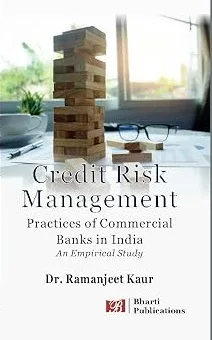
Download Cover Image
Do you want to download the full cover image for Credit Risk Management Practices of Commercial Banks in India: An Empirical Study?