
CAA, NRC & NPR: Constitutional Analysis
Prof. (Dr.) Vijender Kumar, Prof. (Dr.) Naresh Kumar Vats
Hardcover
• 160 Pages
• inr 785.00
• English
• 9789389657548
No ratings yet
| Publisher | Bharti Publications |
|---|---|
| Brand/Group | Bharti Publications |
| ISBN13 | 9789389657548 |
| ASIN/SKU | 9389657547 |
| Book Format | Hardcover |
| Language | English |
| Pages | 160 |
| List Price | inr 785.00 |
| Publishing Date | 01/01/2020 |
| Dimensions | 18.5 x 2.5 x 23.75 |
| Weight | 465 |
| Book Code | BD00070117 |
Buy this Book
Amazon Stores
Ebook Stores
Other Stores
Discover CAA, NRC and NPR: Constitutional Analysis by Prof. (Dr.) Vijender Kumar. This book is published by Bharti Publications in Hardcover format, ISBN 9789389657548, ASIN 9389657547.
Book Description
The Constitutional Amendment Act, 2019 (hereinafter CAA) was enacted by the central government on 11th December, 2019. The purpose of this legislation is to provide citizenship to illegal immigrants of Hindu, Sikh, Buddhists, Jain, Parsi and Christian religious minorities, who had faced persecution in countries like Pakistan, Bangladesh and Afghanistan and had migrated to India before December, 2014. The CAA was passed as an amendment to the Citizenship Act, 1955, in order to relax the naturalization requirements of the illegal immigrants fulfilling the aforementioned conditions. The Citizenship Amendment Act of 2019 introduced two amendments in the Citizenship Act, 1955 (Parent Act). The first change has been made in section 2 (1) (b), which defines ‘illegal immigrants’. The new definition excludes “persons belonging to minority communities, namely, Hindus, Sikhs, Buddhists, Jain, Parsi and Christian from Afghanistan, Bangladesh and Pakistan” from the ambit of “illegal immigrants”. The second change is that the new act reduces the period of residence in India for the acquisition of Indian citizenship through naturalization to 5 years which was earlier 11 years.
Author Biography
Author Biography will be added soon…
Editorial Reviews
Editorial Reviews will be added soon…
Book Summary
The Citizenship Amendment Act, 2019: Constitutional, Legal and Contemporary Perspectives examines one of the most significant and debated changes to India's citizenship framework in recent years. The book provides a detailed exploration of the Citizenship Amendment Act (CAA), 2019, its relationship with the Citizenship Act, 1955, and the legal and constitutional questions arising from its provisions.
The Citizenship Amendment Act was enacted by Parliament in December 2019 to amend specific provisions of the Citizenship Act, 1955. Among its principal changes was the introduction of a revised framework concerning certain persons from specified religious minority communities who had entered India from Afghanistan, Bangladesh, and Pakistan, subject to the conditions prescribed by the legislation. The Act sought to modify the legal treatment of these persons under the citizenship framework and introduced provisions concerning their eligibility for citizenship by naturalisation.
A central feature examined in the book is the amendment to Section 2(1)(b) of the Citizenship Act, 1955, relating to the definition of an “illegal immigrant.” The amendment created an exception for persons belonging to specified communities—Hindus, Sikhs, Buddhists, Jains, Parsis, and Christians—from Afghanistan, Bangladesh, and Pakistan, subject to the statutory requirements. The book explores the legal significance of this change and its implications for India's citizenship regime.
Another important provision discussed is the reduction in the prescribed period of residence for naturalisation. The amendment altered the relevant requirement for eligible persons covered by the Act, reducing the period of residence or service in India specified under the citizenship framework from 11 years to 5 years. The book examines the rationale, legal consequences, and practical implications of this change within the broader framework of Indian citizenship law.
Beyond explaining the statutory amendments, the book seeks to place the CAA within India's wider constitutional and legal framework. It considers questions relating to citizenship, equality, classification, constitutional principles, legislative competence, secularism, fundamental rights, and the relationship between statutory law and constitutional guarantees. By examining these dimensions, the book encourages readers to understand the legislation not merely as an isolated statutory amendment but as part of the continuing evolution of India's citizenship regime.
The subject is particularly significant because citizenship involves fundamental questions concerning legal identity, rights, membership of the political community, and the relationship between individuals and the State. The CAA has generated extensive public, academic, political, and legal discussion, making a careful and objective examination of its provisions especially relevant.
This book is intended to provide readers with a structured understanding of the legislation, its key amendments, and the legal issues associated with its implementation. It can serve as a useful reference for law students, legal practitioners, academicians, researchers, policymakers, constitutional scholars, and readers interested in Indian citizenship and contemporary constitutional developments.
By presenting the statutory provisions alongside their broader constitutional and legal context, the book seeks to facilitate informed academic discussion and further research on the Citizenship Amendment Act, 2019. It encourages readers to critically engage with the evolving questions surrounding citizenship, constitutional governance, equality, and the rights and responsibilities associated with membership in the Indian polity.
The Citizenship Amendment Act was enacted by Parliament in December 2019 to amend specific provisions of the Citizenship Act, 1955. Among its principal changes was the introduction of a revised framework concerning certain persons from specified religious minority communities who had entered India from Afghanistan, Bangladesh, and Pakistan, subject to the conditions prescribed by the legislation. The Act sought to modify the legal treatment of these persons under the citizenship framework and introduced provisions concerning their eligibility for citizenship by naturalisation.
A central feature examined in the book is the amendment to Section 2(1)(b) of the Citizenship Act, 1955, relating to the definition of an “illegal immigrant.” The amendment created an exception for persons belonging to specified communities—Hindus, Sikhs, Buddhists, Jains, Parsis, and Christians—from Afghanistan, Bangladesh, and Pakistan, subject to the statutory requirements. The book explores the legal significance of this change and its implications for India's citizenship regime.
Another important provision discussed is the reduction in the prescribed period of residence for naturalisation. The amendment altered the relevant requirement for eligible persons covered by the Act, reducing the period of residence or service in India specified under the citizenship framework from 11 years to 5 years. The book examines the rationale, legal consequences, and practical implications of this change within the broader framework of Indian citizenship law.
Beyond explaining the statutory amendments, the book seeks to place the CAA within India's wider constitutional and legal framework. It considers questions relating to citizenship, equality, classification, constitutional principles, legislative competence, secularism, fundamental rights, and the relationship between statutory law and constitutional guarantees. By examining these dimensions, the book encourages readers to understand the legislation not merely as an isolated statutory amendment but as part of the continuing evolution of India's citizenship regime.
The subject is particularly significant because citizenship involves fundamental questions concerning legal identity, rights, membership of the political community, and the relationship between individuals and the State. The CAA has generated extensive public, academic, political, and legal discussion, making a careful and objective examination of its provisions especially relevant.
This book is intended to provide readers with a structured understanding of the legislation, its key amendments, and the legal issues associated with its implementation. It can serve as a useful reference for law students, legal practitioners, academicians, researchers, policymakers, constitutional scholars, and readers interested in Indian citizenship and contemporary constitutional developments.
By presenting the statutory provisions alongside their broader constitutional and legal context, the book seeks to facilitate informed academic discussion and further research on the Citizenship Amendment Act, 2019. It encourages readers to critically engage with the evolving questions surrounding citizenship, constitutional governance, equality, and the rights and responsibilities associated with membership in the Indian polity.
Sample Chapters
Sample Chapters will be added soon…
Reader Reviews
No reviews yet.
CAA, NRC & NPR: Constitutional Analysis
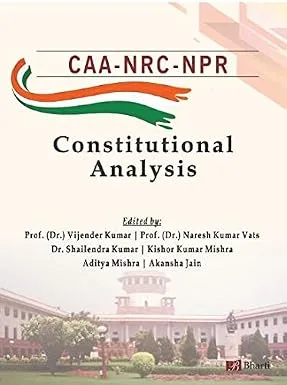
Download Cover Image
Do you want to download the full cover image for CAA, NRC & NPR: Constitutional Analysis?