
Forensic Science in Crime Investigation Trial & Deliver to Justice
Dr. Rekha Khandelwal, DR. SANJULA THANVI
Hardcover
• 335 Pages
• inr 1180.00
• English
• 9788119079810
No ratings yet
| Publisher | Bharti Publications |
|---|---|
| Brand/Group | Bharti Publications |
| ISBN13 | 9788119079810 |
| ASIN/SKU | 8119079817 |
| Book Format | Hardcover |
| Language | English |
| Pages | 335 |
| List Price | inr 1180.00 |
| Publishing Date | 26/09/2023 |
| Dimensions | 14 x 3 x 22 |
| Weight | 600 |
| Book Code | BD00070133 |
Buy this Book
Amazon Stores
Ebook Stores
Other Stores
Discover Forensic Science in Crime Investigation Trial and Deliver to Justice by Dr. Rekha Khandelwal. This book is published by Bharti Publications in Hardcover format, ISBN 9788119079810, ASIN 8119079817.
Book Description
"Forensic Science in Crime Investigation, Trial & Delivery to Justice" is a comprehensive book that delves into the application of various forensic techniques in criminal investigations, trials, and the pursuit of justice. The book covers a wide range of forensic methods and concepts, including Alphonse Bertillon's Portrait Parle, Superimposition technique, Fingerprinting technique, Narco-Analysis Interrogation test, Polygraph test, Brain-mapping, DNA analysis, Cyber Forensics, and more. A more inclusive definition of forensic science is provided in the book, describing it as a scientific field that employs the principles and practices of natural sciences to recognize, identify, personalize, and evaluate physical evidence with the goal of facilitating criminal proceedings. The book offers a detailed explanation of the relationship between the concepts of Portrait Parle and Bertillon Card. It delves into the meaning of Portrait Parle, its historical development, the methods used in creating a Portrait Parle, and its significance in connection with the Bertillon Card. Throughout the book, readers can find numerous real-life stories and case studies that illustrate the invaluable role of forensic science in criminal investigations. These stories serve to highlight how forensic techniques have played a pivotal role in solving crimes, ensuring fair trials, and delivering justice.
Author Biography
Dr. Rekha Khandelwal is a distinguished expert in the field of criminal law, holding a BSc, LLM, NET, and a PhD degree. Passionate about reading and writing, Dr. Rekha Khandelwal has made significant contributions to the legal field. She is renowned for her expertise and has been a prominent speaker, delivering numerous presentations at both national and international webinars, seminars, and conferences
Editorial Reviews
Editorial Reviews will be added soon…
Book Summary
Forensic Science in Crime Investigation, Trial & Delivery to Justice is a comprehensive and insightful work that explores the vital role of forensic science in criminal investigation, judicial proceedings, and the effective delivery of justice. The book presents forensic science as an essential bridge between scientific knowledge and the legal system, demonstrating how the systematic examination and evaluation of physical evidence can assist investigators, courts, and other stakeholders in establishing facts and resolving criminal cases.
The book introduces readers to a wide range of forensic techniques, principles, and investigative methods used in modern criminal justice. It covers important areas such as Alphonse Bertillon's Portrait Parle, the Superimposition Technique, Fingerprinting, Narco-Analysis Interrogation, Polygraph Testing, Brain-Mapping, DNA Analysis, Cyber Forensics, and other significant forensic approaches. Each technique is discussed in relation to its application and relevance in criminal investigation and the judicial process.
A notable feature of the book is its detailed examination of Portrait Parle and the Bertillon Card. It explains the meaning and historical development of Portrait Parle, the methods involved in preparing a facial description, and its connection with the Bertillon identification system. This discussion provides readers with valuable insight into the historical evolution of criminal identification techniques and their contribution to forensic investigation.
The book also emphasizes the broader meaning of forensic science, describing it as a scientific discipline that applies the principles and practices of the natural sciences to the recognition, identification, individualization, and evaluation of physical evidence. Through this perspective, the work highlights how scientific evidence can contribute to the investigation of crimes, support the prosecution and defence during trials, and assist courts in reaching informed and just decisions.
One of the most engaging aspects of the book is the inclusion of real-life stories and case studies. These examples demonstrate the practical application of forensic techniques and illustrate how scientific evidence can provide crucial leads, identify offenders, establish connections between suspects and crime scenes, and help resolve complex criminal cases. The case studies also underline the importance of accuracy, objectivity, and scientific methodology in the criminal justice process.
Overall, Forensic Science in Crime Investigation, Trial & Delivery to Justice provides a valuable introduction to the intersection of forensic science and criminal law. By combining theoretical concepts, investigative techniques, historical developments, and practical case studies, the book offers a comprehensive understanding of how forensic science contributes to crime detection, fair trials, and the pursuit of justice. It will be useful for students, researchers, legal professionals, forensic practitioners, investigators, and anyone interested in understanding the growing significance of scientific evidence in the modern justice system.
The book introduces readers to a wide range of forensic techniques, principles, and investigative methods used in modern criminal justice. It covers important areas such as Alphonse Bertillon's Portrait Parle, the Superimposition Technique, Fingerprinting, Narco-Analysis Interrogation, Polygraph Testing, Brain-Mapping, DNA Analysis, Cyber Forensics, and other significant forensic approaches. Each technique is discussed in relation to its application and relevance in criminal investigation and the judicial process.
A notable feature of the book is its detailed examination of Portrait Parle and the Bertillon Card. It explains the meaning and historical development of Portrait Parle, the methods involved in preparing a facial description, and its connection with the Bertillon identification system. This discussion provides readers with valuable insight into the historical evolution of criminal identification techniques and their contribution to forensic investigation.
The book also emphasizes the broader meaning of forensic science, describing it as a scientific discipline that applies the principles and practices of the natural sciences to the recognition, identification, individualization, and evaluation of physical evidence. Through this perspective, the work highlights how scientific evidence can contribute to the investigation of crimes, support the prosecution and defence during trials, and assist courts in reaching informed and just decisions.
One of the most engaging aspects of the book is the inclusion of real-life stories and case studies. These examples demonstrate the practical application of forensic techniques and illustrate how scientific evidence can provide crucial leads, identify offenders, establish connections between suspects and crime scenes, and help resolve complex criminal cases. The case studies also underline the importance of accuracy, objectivity, and scientific methodology in the criminal justice process.
Overall, Forensic Science in Crime Investigation, Trial & Delivery to Justice provides a valuable introduction to the intersection of forensic science and criminal law. By combining theoretical concepts, investigative techniques, historical developments, and practical case studies, the book offers a comprehensive understanding of how forensic science contributes to crime detection, fair trials, and the pursuit of justice. It will be useful for students, researchers, legal professionals, forensic practitioners, investigators, and anyone interested in understanding the growing significance of scientific evidence in the modern justice system.
Sample Chapters
Sample Chapters will be added soon…
Reader Reviews
No reviews yet.
Forensic Science in Crime Investigation Trial & Deliver to Justice
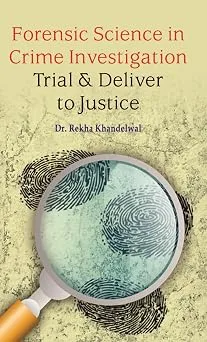
Download Cover Image
Do you want to download the full cover image for Forensic Science in Crime Investigation Trial & Deliver to Justice?