
Changing Paradigm of Law and Policy: A Comparative Assessment
Prof. (Dr.) Aditya Tomar, Dr. Jane Eyre Mathew
Hardcover
• 361 Pages
• inr 1480.00
• English
• 9789391681975
No ratings yet
| Publisher | Bharti Publications |
|---|---|
| Brand/Group | Bharti Publications |
| ISBN13 | 9789391681975 |
| ASIN/SKU | 9391681972 |
| Book Format | Hardcover |
| Language | English |
| Pages | 361 |
| List Price | inr 1480.00 |
| Publishing Date | 20/02/2023 |
| Dimensions | 15.6 x 2.5 x 2.75 |
| Weight | 750 |
| Book Code | BD00070150 |
Buy this Book
Amazon Stores
Ebook Stores
Other Stores
Discover Changing Paradigm of Law and Policy: A Comparative Assessment by Prof. (Dr.) Aditya Tomar. This book is published by Bharti Publications in Hardcover format, ISBN 9789391681975, ASIN 9391681972.
Book Description
Comparative Law caters to the study of legal systems of different countries in comparison with each other. With the emergence of globalization, the area of comparative law is garnering more and more significance in matters of business, crimes, family, media, IPR, technology and so on. A systematic application of the various branches of law helps in understanding the nuances and the emerging issues in the different countries and in adopting the best practices after processing and analyzing these laws. The comparative law jurisdiction is immensely being influenced by the courts across the globe with new practices emerging in this field.
The present book focuses on 'droit compare' on the grounds of interconnectedness of people, business and government with greater usage of international and comparative legal study. This book has major focus on the comparative constitutional law in India and Australia as a base country and being compared with the other nations. The constitutional design and constitutional adjudication are focus upon with inputs on constitutional federalism, affirmative action for racial, ethnic, minority groups, migrants and gender equality etc. Aspects relating to Environmental and health facets highlighting the right to life and the difficulties during COVID times are also touched upon. This is a comprehensive book divulging into the varied intricacies of the comparative law in modern times.
The present book focuses on 'droit compare' on the grounds of interconnectedness of people, business and government with greater usage of international and comparative legal study. This book has major focus on the comparative constitutional law in India and Australia as a base country and being compared with the other nations. The constitutional design and constitutional adjudication are focus upon with inputs on constitutional federalism, affirmative action for racial, ethnic, minority groups, migrants and gender equality etc. Aspects relating to Environmental and health facets highlighting the right to life and the difficulties during COVID times are also touched upon. This is a comprehensive book divulging into the varied intricacies of the comparative law in modern times.
Author Biography
Author Biography will be added soon…
Editorial Reviews
Editorial Reviews will be added soon…
Book Summary
Comparative Law: Constitutional Perspectives and Emerging Global Issues provides a comprehensive examination of comparative law and its growing relevance in an increasingly interconnected world. Comparative law involves the systematic study and analysis of the legal systems of different countries, enabling readers to understand similarities, differences, evolving practices, and emerging legal challenges across jurisdictions.
With the expansion of globalization, comparative legal studies have acquired increasing importance in areas such as business, criminal law, family law, media, intellectual property rights, technology, human rights, and constitutional governance. The book explores how comparative analysis can assist in understanding the strengths and limitations of different legal frameworks and in identifying appropriate legal practices that may be adapted to changing social and economic circumstances.
A central focus of the book is comparative constitutional law, with particular emphasis on India and Australia as base jurisdictions. Their constitutional structures, institutional arrangements, and approaches to constitutional adjudication are examined in comparison with developments in other countries. The book explores how constitutional principles evolve through judicial interpretation and how courts across jurisdictions contribute to the development of comparative legal thought.
The work gives particular attention to constitutional design and constitutional adjudication, examining how different constitutional systems address questions of governance, institutional relationships, rights protection, and the distribution of powers. The concept of constitutional federalism is also explored, providing insights into how federal systems organize relationships between different levels of government and respond to changing political and social realities.
Another important dimension of the book concerns equality and affirmative action. It considers legal approaches relating to racial, ethnic, and minority groups, migrants, and gender equality, highlighting the ways in which different jurisdictions attempt to address historical disadvantages and promote substantive equality. Comparative analysis in these areas provides an opportunity to understand diverse approaches to rights protection and social justice.
The book also examines significant environmental and health-related legal issues, particularly through the perspective of the right to life and fundamental rights. The extraordinary circumstances created by the COVID-19 pandemic provide an important context for considering the challenges faced by legal systems in balancing individual rights, public health, governmental authority, and social welfare during times of crisis.
A key theme running throughout the book is the increasing interconnectedness of people, businesses, governments, and legal institutions. As cross-border interactions continue to expand, knowledge of international and comparative law has become increasingly important for understanding legal relationships and addressing complex contemporary issues. The influence of courts around the world and the emergence of innovative judicial practices further demonstrate the dynamic nature of comparative legal studies.
Overall, Comparative Law: Constitutional Perspectives and Emerging Global Issues offers a multidisciplinary and contemporary exploration of comparative legal systems. By bringing together constitutional law, human rights, federalism, equality, environmental law, health law, and judicial developments, the book provides readers with a broader understanding of the complexities of modern comparative law.
The book will be particularly valuable for law students, postgraduate scholars, researchers, academicians, legal practitioners, policymakers, and anyone interested in international and comparative legal studies. It serves as a useful resource for understanding how different legal systems respond to shared challenges and how comparative analysis can contribute to the development of more effective and responsive legal frameworks.
With the expansion of globalization, comparative legal studies have acquired increasing importance in areas such as business, criminal law, family law, media, intellectual property rights, technology, human rights, and constitutional governance. The book explores how comparative analysis can assist in understanding the strengths and limitations of different legal frameworks and in identifying appropriate legal practices that may be adapted to changing social and economic circumstances.
A central focus of the book is comparative constitutional law, with particular emphasis on India and Australia as base jurisdictions. Their constitutional structures, institutional arrangements, and approaches to constitutional adjudication are examined in comparison with developments in other countries. The book explores how constitutional principles evolve through judicial interpretation and how courts across jurisdictions contribute to the development of comparative legal thought.
The work gives particular attention to constitutional design and constitutional adjudication, examining how different constitutional systems address questions of governance, institutional relationships, rights protection, and the distribution of powers. The concept of constitutional federalism is also explored, providing insights into how federal systems organize relationships between different levels of government and respond to changing political and social realities.
Another important dimension of the book concerns equality and affirmative action. It considers legal approaches relating to racial, ethnic, and minority groups, migrants, and gender equality, highlighting the ways in which different jurisdictions attempt to address historical disadvantages and promote substantive equality. Comparative analysis in these areas provides an opportunity to understand diverse approaches to rights protection and social justice.
The book also examines significant environmental and health-related legal issues, particularly through the perspective of the right to life and fundamental rights. The extraordinary circumstances created by the COVID-19 pandemic provide an important context for considering the challenges faced by legal systems in balancing individual rights, public health, governmental authority, and social welfare during times of crisis.
A key theme running throughout the book is the increasing interconnectedness of people, businesses, governments, and legal institutions. As cross-border interactions continue to expand, knowledge of international and comparative law has become increasingly important for understanding legal relationships and addressing complex contemporary issues. The influence of courts around the world and the emergence of innovative judicial practices further demonstrate the dynamic nature of comparative legal studies.
Overall, Comparative Law: Constitutional Perspectives and Emerging Global Issues offers a multidisciplinary and contemporary exploration of comparative legal systems. By bringing together constitutional law, human rights, federalism, equality, environmental law, health law, and judicial developments, the book provides readers with a broader understanding of the complexities of modern comparative law.
The book will be particularly valuable for law students, postgraduate scholars, researchers, academicians, legal practitioners, policymakers, and anyone interested in international and comparative legal studies. It serves as a useful resource for understanding how different legal systems respond to shared challenges and how comparative analysis can contribute to the development of more effective and responsive legal frameworks.
Sample Chapters
Sample Chapters will be added soon…
Reader Reviews
No reviews yet.
Changing Paradigm of Law and Policy: A Comparative Assessment
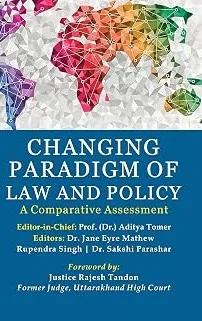
Download Cover Image
Do you want to download the full cover image for Changing Paradigm of Law and Policy: A Comparative Assessment?