
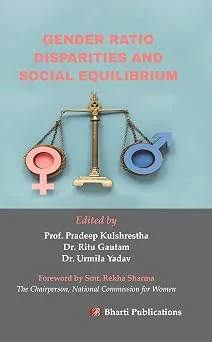
Gender Ratio Disparities and Social Equilibrium
Dr. Ritu Gautam, Dr. Urmila Yadav
Hardcover
• 244 Pages
• inr 860.00
• English
• 9789391681753
No ratings yet
| Publisher | Bharti Publications |
|---|---|
| Brand/Group | Bharti Publications |
| ISBN13 | 9789391681753 |
| ASIN/SKU | 9391681751 |
| Book Format | Hardcover |
| Language | English |
| Pages | 244 |
| List Price | inr 860.00 |
| Publishing Date | 25/03/2022 |
| Book Code | BD00070165 |
Buy this Book
Amazon Stores
Ebook Stores
Other Stores
Discover Gender Ratio Disparities and Social Equilibrium by Dr. Ritu Gautam. This book is published by Bharti Publications in Hardcover format, ISBN 9789391681753, ASIN 9391681751.
Book Description
Gender disparities refer to unequal treatment or perceptions of people based on their gender. It is caused by disparities in socially constructed gender roles. Gender discrimination, in other words, refers to unequal rights between males and females based on different gender roles, resulting in unequal treatment in life. Gender inequality has been widely recognized throughout history, but it was not until the early twentieth century that the transformation of gender relations became one of the most rapid, profound social changes
Gender inequality is prevalent in India's households, workplaces, and society as a whole. Gender inequality manifests itself at a very early stage in some developing countries, such as India, where a girl child faces discrimination from the womb and eventually leads to female feticide. Female children are treated as inferior to male children, and this is deeply ingrained in the female child's mind. This is more prevalent in India and other developing countries. Educating a boy is regarded as an investment, whereas educating a girl is regarded as an outlay.
This book throws light on different gender ratio issues, social-legal challenges and initiatives to maintain social Equilibrium. Education is one of the most effective ways to empower a person or a community in general and women and girls in particular. The rate of literacy and educational achievement are both measures of a society's overall growth. Gender equality and women's empowerment are critical for long-term growth and prosperity. India has followed a range of national, social, economic, and political development methods since independence. Women's conditions and status have dramatically improved throughout time.
Gender inequality is prevalent in India's households, workplaces, and society as a whole. Gender inequality manifests itself at a very early stage in some developing countries, such as India, where a girl child faces discrimination from the womb and eventually leads to female feticide. Female children are treated as inferior to male children, and this is deeply ingrained in the female child's mind. This is more prevalent in India and other developing countries. Educating a boy is regarded as an investment, whereas educating a girl is regarded as an outlay.
This book throws light on different gender ratio issues, social-legal challenges and initiatives to maintain social Equilibrium. Education is one of the most effective ways to empower a person or a community in general and women and girls in particular. The rate of literacy and educational achievement are both measures of a society's overall growth. Gender equality and women's empowerment are critical for long-term growth and prosperity. India has followed a range of national, social, economic, and political development methods since independence. Women's conditions and status have dramatically improved throughout time.
Author Biography
Author Biography will be added soon…
Editorial Reviews
Editorial Reviews will be added soon…
Book Summary
Gender Inequality in India: Social, Legal and Educational Perspectives examines the persistent challenges of gender disparity and discrimination in Indian society and explores the social, legal, educational, economic, and political measures required to promote gender equality. Gender inequality refers to unequal treatment, opportunities, rights, and social expectations based on gender, often arising from socially constructed roles and deeply rooted cultural practices.
The book examines how gender disparities have historically shaped the lives of women and girls and how these inequalities continue to influence households, workplaces, educational institutions, and society at large. Although the transformation of gender relations has emerged as one of the most significant social changes of the modern era, substantial challenges remain, particularly in developing societies where traditional attitudes and structural inequalities continue to affect women's lives.
A significant focus of the book is the experience of the girl child in India. Gender discrimination can begin even before birth, with practices such as sex selection and female foeticide reflecting deeply entrenched preferences for male children. In many communities, girls may continue to experience unequal access to nutrition, healthcare, education, family resources, and opportunities. The perception that educating a boy represents an investment while educating a girl is an expenditure reflects the persistence of social attitudes that undervalue women's education and economic potential.
The book explores various gender-ratio issues and their social and legal implications, highlighting how demographic imbalances can affect families, communities, and broader social structures. It also considers the social and legal challenges associated with gender discrimination and examines efforts aimed at maintaining social equilibrium and creating a more equitable society.
Education occupies a central place in the book's discussion of women's empowerment. Access to quality education can provide women and girls with knowledge, skills, confidence, economic opportunities, and greater participation in decision-making. Literacy and educational attainment are also important indicators of broader social development. The book therefore emphasizes education as one of the most effective means of addressing gender inequality and enabling women to participate more meaningfully in social, economic, and political life.
The book further examines the relationship between gender equality, women's empowerment, and sustainable development. Equal opportunities for women are essential not only for individual well-being but also for the long-term prosperity of families, communities, and nations. Empowering women through education, employment, legal protection, political participation, and economic opportunities can contribute significantly to inclusive and sustainable development.
Since independence, India has introduced a range of social, economic, political, and legal initiatives aimed at improving the status and conditions of women. The book considers these developments and the progress achieved over time while recognizing that continued efforts are necessary to address persistent forms of discrimination and inequality.
Overall, Gender Inequality in India: Social, Legal and Educational Perspectives provides a comprehensive examination of the causes, manifestations, and consequences of gender inequality while highlighting pathways toward greater social equality and empowerment. It will be valuable for students, researchers, academicians, policymakers, social workers, legal professionals, and readers interested in gender studies, women's empowerment, sociology, law, education, and social development. By bringing together social realities, legal concerns, educational perspectives, and development initiatives, the book contributes to the continuing discourse on achieving a more balanced, inclusive, and equitable society.
The book examines how gender disparities have historically shaped the lives of women and girls and how these inequalities continue to influence households, workplaces, educational institutions, and society at large. Although the transformation of gender relations has emerged as one of the most significant social changes of the modern era, substantial challenges remain, particularly in developing societies where traditional attitudes and structural inequalities continue to affect women's lives.
A significant focus of the book is the experience of the girl child in India. Gender discrimination can begin even before birth, with practices such as sex selection and female foeticide reflecting deeply entrenched preferences for male children. In many communities, girls may continue to experience unequal access to nutrition, healthcare, education, family resources, and opportunities. The perception that educating a boy represents an investment while educating a girl is an expenditure reflects the persistence of social attitudes that undervalue women's education and economic potential.
The book explores various gender-ratio issues and their social and legal implications, highlighting how demographic imbalances can affect families, communities, and broader social structures. It also considers the social and legal challenges associated with gender discrimination and examines efforts aimed at maintaining social equilibrium and creating a more equitable society.
Education occupies a central place in the book's discussion of women's empowerment. Access to quality education can provide women and girls with knowledge, skills, confidence, economic opportunities, and greater participation in decision-making. Literacy and educational attainment are also important indicators of broader social development. The book therefore emphasizes education as one of the most effective means of addressing gender inequality and enabling women to participate more meaningfully in social, economic, and political life.
The book further examines the relationship between gender equality, women's empowerment, and sustainable development. Equal opportunities for women are essential not only for individual well-being but also for the long-term prosperity of families, communities, and nations. Empowering women through education, employment, legal protection, political participation, and economic opportunities can contribute significantly to inclusive and sustainable development.
Since independence, India has introduced a range of social, economic, political, and legal initiatives aimed at improving the status and conditions of women. The book considers these developments and the progress achieved over time while recognizing that continued efforts are necessary to address persistent forms of discrimination and inequality.
Overall, Gender Inequality in India: Social, Legal and Educational Perspectives provides a comprehensive examination of the causes, manifestations, and consequences of gender inequality while highlighting pathways toward greater social equality and empowerment. It will be valuable for students, researchers, academicians, policymakers, social workers, legal professionals, and readers interested in gender studies, women's empowerment, sociology, law, education, and social development. By bringing together social realities, legal concerns, educational perspectives, and development initiatives, the book contributes to the continuing discourse on achieving a more balanced, inclusive, and equitable society.
Sample Chapters
Sample Chapters will be added soon…
Reader Reviews
No reviews yet.
Gender Ratio Disparities and Social Equilibrium
Download Cover Image
Do you want to download the full cover image for Gender Ratio Disparities and Social Equilibrium?