Fundamentals on Plant and Soil Microbial Interactions (Theory and Practice)
Hardcover
• 215 Pages
• inr 1080.00
• English
• 9789391681081
No ratings yet
| Publisher | Bharti Publications |
|---|---|
| Brand/Group | Bharti Publications |
| ISBN13 | 9789391681081 |
| ASIN/SKU | 9391681085 |
| Book Format | Hardcover |
| Language | English |
| Pages | 215 |
| List Price | inr 1080.00 |
| Publishing Date | 17/12/2021 |
| Dimensions | 14.5 x 2 x 22 |
| Weight | 450 |
| Book Code | BD00070171 |
Buy this Book
Amazon Stores
Ebook Stores
Other Stores
Discover Fundamentals on Plant and Soil Microbial Interactions (Theory and Practice) by Dr. Pampi Ghosh. This book is published by Bharti Publications in Hardcover format, ISBN 9789391681081, ASIN 9391681085.
Book Description
Soil is the earth’s crust and composed of many organisms with full of diverse elements, minerals to enhance the growth of microbes and plants. Soils of different microclimatic site have different edaphic components. Activity of soil is due to diverse kind of fungi, bacteria, myxomycetes, actinomycetes, nematodes, mill moles, algae and soil inhabiting arthropods. The research field and allied disciplines are correlated to this topic is due to mother connection and broadcast many wings in particular way. These are genetics, proteomics, cryopreservation, vegetable crop and floriculture study, horticulture and fruit technology, seed technology, agronomy, soil science and agricultural chemistry, entomology, mycology and plant pathology, nematology, agricultural chemicals and pollution study, plant physiology, biochemistry, agricultural economics, agricultural extension, ecology, forestry and pomology. All disciplines have greater depth of study and research but main focus on the research and extension. Therefore, to success the principal goal of the research scholars, students and faculties all are trying to develop innovative ideas to make better growth and development in terms of sustainable way for any kind of product. The onset of seeds and various plant propagules actively perform in this environment due top activity of different factors like temperature, humidity, moisture, precipitation, wind blow and many more including edaphic or soil factors. As a whole this is a big co-system though details is not yet been discovered for each micro environment. A small step to write scientific article on various aspects on this topic to disseminate knowledge on soil-plant-microbes interactions in various field of scientific field. Dr. Pampi Ghosh is an Assistant Professor (S-3) of Botany, Seva Bharati Mahavidyalaya, Kapgari, Jhargarm, West Bengal. She has joined at Seva Bharati Mahavidyalaya, Kapgari, Jhargram, West Bengal, at the Department of Botany through West Bengal Coll.
Author Biography
Author Biography will be added soon…
Editorial Reviews
Editorial Reviews will be added soon…
Book Summary
Soil–Plant–Microbe Interactions: Perspectives and Applications explores the complex and dynamic relationships between soil, plants, and the diverse communities of microorganisms and other organisms that inhabit the soil environment. Soil forms the foundation of terrestrial ecosystems and contains a rich combination of minerals, organic matter, microorganisms, and other biological components that collectively influence plant growth, nutrient cycling, and ecosystem functioning.
Soils vary considerably across different geographical and microclimatic environments, resulting in differences in their physical, chemical, and biological characteristics. The biological activity of soil is strongly influenced by a wide range of organisms, including fungi, bacteria, myxomycetes, actinomycetes, nematodes, algae, and soil-dwelling arthropods. The interactions among these organisms and their surrounding environment play a fundamental role in maintaining soil fertility, supporting plant development, and sustaining ecological processes.
The book brings together scientific perspectives on the soil–plant–microbe relationship and its significance across a broad range of agricultural, botanical, ecological, and environmental disciplines. It recognizes that soil biology and plant development are closely interconnected with fields such as genetics, proteomics, cryopreservation, vegetable crop science, floriculture, horticulture, fruit technology, seed technology, agronomy, soil science, agricultural chemistry, entomology, mycology, plant pathology, nematology, plant physiology, biochemistry, agricultural economics, agricultural extension, ecology, forestry, and pomology.
A major focus of the book is the importance of research and extension in developing innovative and sustainable approaches for improving plant growth, agricultural productivity, and resource management. The successful development of sustainable agricultural systems requires an integrated understanding of biological interactions and environmental factors. Researchers, students, and faculty members across different disciplines continue to explore innovative approaches that can contribute to improved productivity while minimizing environmental impacts.
The book also highlights the role of environmental factors such as temperature, humidity, soil moisture, precipitation, wind, and other climatic conditions in influencing seeds, plant propagules, microorganisms, and soil processes. These factors interact continuously with edaphic conditions, creating complex microenvironments in which plants and microorganisms respond and adapt to changing circumstances.
Understanding these interactions is particularly important for developing sustainable solutions in agriculture and environmental management. The complex nature of soil ecosystems means that many interactions within specific microenvironments remain insufficiently explored. Continued research can therefore provide valuable insights into nutrient cycling, plant health, microbial activity, soil fertility, crop productivity, and ecological sustainability.
The book represents a scientific effort to bring together diverse perspectives and disseminate knowledge concerning soil–plant–microbe interactions and their applications across various fields of science. It encourages interdisciplinary research and emphasizes the importance of understanding biological systems as interconnected rather than isolated components.
The work is supported by the academic and research background of Dr. Pampi Ghosh, Assistant Professor (S-3) of Botany at Seva Bharati Mahavidyalaya, Kapgari, Jhargram, West Bengal. Her academic engagement in Botany contributes to the scientific perspective of the work and its focus on plant, soil, and environmental interactions.
Overall, Soil–Plant–Microbe Interactions: Perspectives and Applications will be valuable for students, research scholars, academicians, agricultural scientists, botanists, environmental researchers, and professionals working in agriculture, soil science, microbiology, plant sciences, ecology, forestry, and related disciplines. By highlighting the interconnected nature of soil organisms, plants, and environmental factors, the book provides a foundation for further research and encourages the development of innovative, scientifically informed, and sustainable approaches to plant and ecosystem management.
Soils vary considerably across different geographical and microclimatic environments, resulting in differences in their physical, chemical, and biological characteristics. The biological activity of soil is strongly influenced by a wide range of organisms, including fungi, bacteria, myxomycetes, actinomycetes, nematodes, algae, and soil-dwelling arthropods. The interactions among these organisms and their surrounding environment play a fundamental role in maintaining soil fertility, supporting plant development, and sustaining ecological processes.
The book brings together scientific perspectives on the soil–plant–microbe relationship and its significance across a broad range of agricultural, botanical, ecological, and environmental disciplines. It recognizes that soil biology and plant development are closely interconnected with fields such as genetics, proteomics, cryopreservation, vegetable crop science, floriculture, horticulture, fruit technology, seed technology, agronomy, soil science, agricultural chemistry, entomology, mycology, plant pathology, nematology, plant physiology, biochemistry, agricultural economics, agricultural extension, ecology, forestry, and pomology.
A major focus of the book is the importance of research and extension in developing innovative and sustainable approaches for improving plant growth, agricultural productivity, and resource management. The successful development of sustainable agricultural systems requires an integrated understanding of biological interactions and environmental factors. Researchers, students, and faculty members across different disciplines continue to explore innovative approaches that can contribute to improved productivity while minimizing environmental impacts.
The book also highlights the role of environmental factors such as temperature, humidity, soil moisture, precipitation, wind, and other climatic conditions in influencing seeds, plant propagules, microorganisms, and soil processes. These factors interact continuously with edaphic conditions, creating complex microenvironments in which plants and microorganisms respond and adapt to changing circumstances.
Understanding these interactions is particularly important for developing sustainable solutions in agriculture and environmental management. The complex nature of soil ecosystems means that many interactions within specific microenvironments remain insufficiently explored. Continued research can therefore provide valuable insights into nutrient cycling, plant health, microbial activity, soil fertility, crop productivity, and ecological sustainability.
The book represents a scientific effort to bring together diverse perspectives and disseminate knowledge concerning soil–plant–microbe interactions and their applications across various fields of science. It encourages interdisciplinary research and emphasizes the importance of understanding biological systems as interconnected rather than isolated components.
The work is supported by the academic and research background of Dr. Pampi Ghosh, Assistant Professor (S-3) of Botany at Seva Bharati Mahavidyalaya, Kapgari, Jhargram, West Bengal. Her academic engagement in Botany contributes to the scientific perspective of the work and its focus on plant, soil, and environmental interactions.
Overall, Soil–Plant–Microbe Interactions: Perspectives and Applications will be valuable for students, research scholars, academicians, agricultural scientists, botanists, environmental researchers, and professionals working in agriculture, soil science, microbiology, plant sciences, ecology, forestry, and related disciplines. By highlighting the interconnected nature of soil organisms, plants, and environmental factors, the book provides a foundation for further research and encourages the development of innovative, scientifically informed, and sustainable approaches to plant and ecosystem management.
Sample Chapters
Sample Chapters will be added soon…
Reader Reviews
No reviews yet.
Fundamentals on Plant and Soil Microbial Interactions (Theory and Practice)
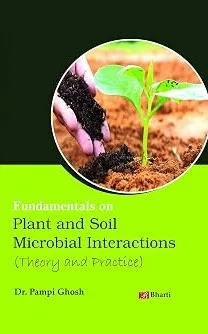
Download Cover Image
Do you want to download the full cover image for Fundamentals on Plant and Soil Microbial Interactions (Theory and Practice)?