
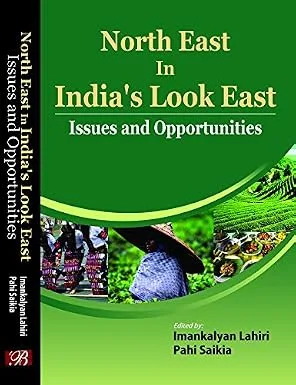
North East in India's Look East :Issues & Oppurtunity
Dr.Imankalyan Lahari, Pahi Saikia
Hardcover
• 296 Pages
• inr 535.00
• English
• 978-93-85000-00-3
No ratings yet
| Publisher | Bharti Publications |
|---|---|
| Brand/Group | Bharti Publications |
| ISBN13 | 978-93-85000-00-3 |
| ASIN/SKU | 9385000004 |
| Book Format | Hardcover |
| Language | English |
| Pages | 296 |
| List Price | inr 535.00 |
| Publishing Date | 01/01/2015 |
| Dimensions | 20 x 14 x 4 |
| Book Code | BD00070496 |
Buy this Book
Amazon Stores
Ebook Stores
Other Stores
Discover North East in India's Look East :Issues and Oppurtunity by Dr.Imankalyan Lahari. This book is published by Bharti Publications in Hardcover format, ISBN 978-93-85000-00-3, ASIN 9385000004.
Book Description
The strategic, political and economic importance of Northeast for India’s Look East Policy cannot be overemphasized. It not only provides an opportunity to consolidate India’s relations with the near South East Asian countries, but it also holds immense potential for trade expansion and regional development for the North East of India within the framework of BIMSTEC, Mekong Ganga Project,K2K, and other initiatives. It has been often claimed that South East Asia begins in the North East of India. Geo-strategically North East India is therefore integral to the BIMSTEC initiative. As the current phase of India’s Look East Policy seeks to entrench as well as diversify India’s relations with the countries of East Asia, considerable attention needs to be paid to channelise the political-economic benefits towards the North Eastern Region.
Author Biography
Author Biography will be added soon…
Editorial Reviews
Editorial Reviews will be added soon…
Book Summary
The Northeast Region of India occupies a position of exceptional strategic, political, economic, and geopolitical significance in the country’s engagement with Southeast and East Asia. Situated at the crossroads of South Asia and Southeast Asia, the region serves as India’s natural gateway towards its eastern neighbours and has become increasingly important in shaping the country’s foreign policy and regional economic ambitions.
This book examines the evolving significance of Northeast India within the framework of India’s Look East Policy and its broader transformation into the Act East Policy. It explores how the region’s geographical proximity to Southeast Asian countries can be transformed into an opportunity for strengthening diplomatic relations, expanding trade and investment, improving connectivity, and promoting sustainable regional development.
The Northeast is not merely a border region; it represents a crucial link between India and the rapidly growing economies of Southeast Asia. Its strategic location provides immense possibilities for cross-border trade, transport connectivity, tourism, cultural exchange, and economic cooperation. The often-used expression that “South East Asia begins in the North East of India” reflects the region’s unique geographical and civilizational position and highlights its potential as a bridge between India and Southeast Asia.
Particular attention is given to the role of regional and multilateral initiatives such as BIMSTEC (Bay of Bengal Initiative for Multi-Sectoral Technical and Economic Cooperation), the Mekong-Ganga Cooperation, K2K, and other connectivity and development initiatives. These frameworks offer opportunities to integrate the Northeast more closely with regional economic networks while simultaneously contributing to India’s larger strategic objectives in the Indo-Pacific and East Asian region.
The book also considers the political and economic dimensions of integrating the Northeast into India’s eastern outreach. Improved roads, railways, waterways, border infrastructure, digital connectivity, and trade corridors can potentially transform the region into a major hub of commerce and regional cooperation. At the same time, the effective realization of these opportunities requires attention to local development, institutional capacity, infrastructure gaps, social concerns, and the interests of communities inhabiting the region.
As India seeks to deepen and diversify its relations with East and Southeast Asian countries, the success of its eastern engagement is closely connected with the meaningful participation and development of Northeast India. The book therefore emphasizes the need to channel the political, economic, and strategic benefits of the Look East/Act East approach towards the region.
Overall, this work provides a comprehensive perspective on the Northeast as a strategic gateway, economic corridor, and vital component of India’s engagement with Southeast Asia. It will be valuable for students, researchers, policymakers, academics, and readers interested in India’s foreign policy, Northeast studies, regional cooperation, international relations, economic development, and the changing geopolitical landscape of South and Southeast Asia.
This book examines the evolving significance of Northeast India within the framework of India’s Look East Policy and its broader transformation into the Act East Policy. It explores how the region’s geographical proximity to Southeast Asian countries can be transformed into an opportunity for strengthening diplomatic relations, expanding trade and investment, improving connectivity, and promoting sustainable regional development.
The Northeast is not merely a border region; it represents a crucial link between India and the rapidly growing economies of Southeast Asia. Its strategic location provides immense possibilities for cross-border trade, transport connectivity, tourism, cultural exchange, and economic cooperation. The often-used expression that “South East Asia begins in the North East of India” reflects the region’s unique geographical and civilizational position and highlights its potential as a bridge between India and Southeast Asia.
Particular attention is given to the role of regional and multilateral initiatives such as BIMSTEC (Bay of Bengal Initiative for Multi-Sectoral Technical and Economic Cooperation), the Mekong-Ganga Cooperation, K2K, and other connectivity and development initiatives. These frameworks offer opportunities to integrate the Northeast more closely with regional economic networks while simultaneously contributing to India’s larger strategic objectives in the Indo-Pacific and East Asian region.
The book also considers the political and economic dimensions of integrating the Northeast into India’s eastern outreach. Improved roads, railways, waterways, border infrastructure, digital connectivity, and trade corridors can potentially transform the region into a major hub of commerce and regional cooperation. At the same time, the effective realization of these opportunities requires attention to local development, institutional capacity, infrastructure gaps, social concerns, and the interests of communities inhabiting the region.
As India seeks to deepen and diversify its relations with East and Southeast Asian countries, the success of its eastern engagement is closely connected with the meaningful participation and development of Northeast India. The book therefore emphasizes the need to channel the political, economic, and strategic benefits of the Look East/Act East approach towards the region.
Overall, this work provides a comprehensive perspective on the Northeast as a strategic gateway, economic corridor, and vital component of India’s engagement with Southeast Asia. It will be valuable for students, researchers, policymakers, academics, and readers interested in India’s foreign policy, Northeast studies, regional cooperation, international relations, economic development, and the changing geopolitical landscape of South and Southeast Asia.
Sample Chapters
Sample Chapters will be added soon…
Reader Reviews
No reviews yet.
North East in India's Look East :Issues & Oppurtunity
Download Cover Image
Do you want to download the full cover image for North East in India's Look East :Issues & Oppurtunity?