
POLICE AND SOCIETY
Mr. Aditya Mishra, Mr. Rahul Vats Prof
Hardcover
• 160 Pages
• inr 580.00
• English
• 978-93-91681-50-0
No ratings yet
| Publisher | Bharti Publications |
|---|---|
| Brand/Group | Bharti Publications |
| ISBN13 | 978-93-91681-50-0 |
| ASIN/SKU | 9391681506 |
| Book Format | Hardcover |
| Language | English |
| Pages | 160 |
| List Price | inr 580.00 |
| Publishing Date | 30/03/2022 |
| Dimensions | 13.75 x 2.5 x 21.25 |
| Book Code | BD00070508 |
Buy this Book
Amazon Stores
Ebook Stores
Other Stores
Discover POLICE AND SOCIETY by Mr. Aditya Mishra. This book is published by Bharti Publications in Hardcover format, ISBN 978-93-91681-50-0, ASIN 9391681506, under Police.
Book Description
The book titled “Police and Society” dealing with Police State: A Negation to Rule of Law; Criminal Investigation using Technology: A Need of the Hour; Impact of Technology on Police Personality: An Analysis; Custodial Murders and Police Encounters: A Blurring Line; Police modernization with reference to Technology: An Analysis; Human Rights Approach with reference to Extended Working hours of Police Personnel; Use and Abuse of Technology in Criminal Investigation: A Study of Indian Police; An Exploratory Analysis of the Model Police Act, 2006; Plight in Police Force in India: Remedial Way Ahead; Role of Police Personnel during Covid-Pandemic: An Evaluation, Transformation in Police system in India: Road Ahead, Procedure of Arrest, Seizure, Search and Bail under NDPS Act.
The present volume signifies a vast store of learning and knowledge, and is endorsement in its own way of the thesis. The book titled Police and Society, is composed to give a variety flavour of essays on legal and social dimensions of contemporary issues which are relevant to the readers and society. The book is significant for students of five year and three-year law courses and also for those who are pursuing any course in criminal or police law. The book will also be useful for reference to LL.M. and research study.
The present volume signifies a vast store of learning and knowledge, and is endorsement in its own way of the thesis. The book titled Police and Society, is composed to give a variety flavour of essays on legal and social dimensions of contemporary issues which are relevant to the readers and society. The book is significant for students of five year and three-year law courses and also for those who are pursuing any course in criminal or police law. The book will also be useful for reference to LL.M. and research study.
Author Biography
Author Biography will be added soon…
Editorial Reviews
Editorial Reviews will be added soon…
Book Summary
Police and Society is a comprehensive collection of scholarly essays examining the complex relationship between policing, law, technology, human rights, and society in contemporary India. Bringing together legal and social perspectives, the volume explores the changing role of the police in a rapidly transforming social and technological environment and considers the challenges confronting the Indian police system.
The book begins by examining fundamental questions concerning the police state and the rule of law, highlighting the importance of ensuring that policing remains consistent with constitutional principles, individual rights, and democratic governance. It further explores the growing role of technology in criminal investigation, recognizing technological advancement as an essential component of modern policing while also drawing attention to the legal and ethical concerns associated with its use.
A significant theme of the volume is the impact of technology on police personality and professional functioning. As digital tools, surveillance mechanisms, forensic technologies, and modern investigative techniques become increasingly integrated into policing, the nature of police work is changing. The book considers both the opportunities presented by technological modernization and the challenges it creates for police personnel.
The volume also addresses some of the most sensitive and debated issues surrounding policing, including custodial deaths and police encounters. It examines the difficult boundary between legitimate law enforcement and potential violations of human rights, emphasizing the need for accountability, transparency, and adherence to due process. In this context, the book also discusses the use and potential abuse of technology in criminal investigation and considers its implications for justice and individual rights.
Another important area of discussion is police modernization in India. The book evaluates the role of technology in strengthening police institutions and considers the reforms necessary to make policing more efficient, responsive, professional, and citizen-oriented. The analysis of the Model Police Act, 2006 further contributes to the discussion on institutional reform and the need for a modern legal framework for policing.
The volume gives considerable attention to the human rights of police personnel themselves, including the implications of extended working hours and demanding working conditions. It recognizes that effective policing requires not only accountability towards citizens but also appropriate working environments, institutional support, and professional welfare for police personnel.
The book further explores the challenges and plight of the police force in India, identifying possible remedial approaches and pathways for reform. It also evaluates the role played by police personnel during the COVID-19 pandemic, highlighting the responsibilities, pressures, and challenges faced by the police while maintaining public order and enforcing emergency measures.
Legal dimensions of policing receive particular attention through discussion of the procedure of arrest, search, seizure, and bail under the Narcotic Drugs and Psychotropic Substances (NDPS) Act. This provides readers with an important understanding of the procedural safeguards and legal considerations involved in criminal enforcement.
Overall, Police and Society offers a diverse and thought-provoking collection addressing contemporary legal, technological, institutional, and social dimensions of policing. By bringing together questions of rule of law, criminal investigation, police modernization, technology, human rights, accountability, and legal procedure, the volume provides a multidimensional understanding of the evolving police system in India.
The book will be particularly useful for students pursuing three-year and five-year law programmes, as well as learners specializing in criminal law, police law, and related disciplines. It will also serve as a valuable reference for LL.M. students, researchers, academicians, legal professionals, policymakers, and anyone interested in the relationship between policing, law, technology, and society.
The book begins by examining fundamental questions concerning the police state and the rule of law, highlighting the importance of ensuring that policing remains consistent with constitutional principles, individual rights, and democratic governance. It further explores the growing role of technology in criminal investigation, recognizing technological advancement as an essential component of modern policing while also drawing attention to the legal and ethical concerns associated with its use.
A significant theme of the volume is the impact of technology on police personality and professional functioning. As digital tools, surveillance mechanisms, forensic technologies, and modern investigative techniques become increasingly integrated into policing, the nature of police work is changing. The book considers both the opportunities presented by technological modernization and the challenges it creates for police personnel.
The volume also addresses some of the most sensitive and debated issues surrounding policing, including custodial deaths and police encounters. It examines the difficult boundary between legitimate law enforcement and potential violations of human rights, emphasizing the need for accountability, transparency, and adherence to due process. In this context, the book also discusses the use and potential abuse of technology in criminal investigation and considers its implications for justice and individual rights.
Another important area of discussion is police modernization in India. The book evaluates the role of technology in strengthening police institutions and considers the reforms necessary to make policing more efficient, responsive, professional, and citizen-oriented. The analysis of the Model Police Act, 2006 further contributes to the discussion on institutional reform and the need for a modern legal framework for policing.
The volume gives considerable attention to the human rights of police personnel themselves, including the implications of extended working hours and demanding working conditions. It recognizes that effective policing requires not only accountability towards citizens but also appropriate working environments, institutional support, and professional welfare for police personnel.
The book further explores the challenges and plight of the police force in India, identifying possible remedial approaches and pathways for reform. It also evaluates the role played by police personnel during the COVID-19 pandemic, highlighting the responsibilities, pressures, and challenges faced by the police while maintaining public order and enforcing emergency measures.
Legal dimensions of policing receive particular attention through discussion of the procedure of arrest, search, seizure, and bail under the Narcotic Drugs and Psychotropic Substances (NDPS) Act. This provides readers with an important understanding of the procedural safeguards and legal considerations involved in criminal enforcement.
Overall, Police and Society offers a diverse and thought-provoking collection addressing contemporary legal, technological, institutional, and social dimensions of policing. By bringing together questions of rule of law, criminal investigation, police modernization, technology, human rights, accountability, and legal procedure, the volume provides a multidimensional understanding of the evolving police system in India.
The book will be particularly useful for students pursuing three-year and five-year law programmes, as well as learners specializing in criminal law, police law, and related disciplines. It will also serve as a valuable reference for LL.M. students, researchers, academicians, legal professionals, policymakers, and anyone interested in the relationship between policing, law, technology, and society.
Sample Chapters
Sample Chapters will be added soon…
Reader Reviews
No reviews yet.
POLICE AND SOCIETY
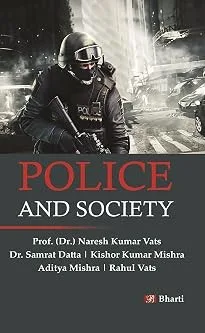
Download Cover Image
Do you want to download the full cover image for POLICE AND SOCIETY?