
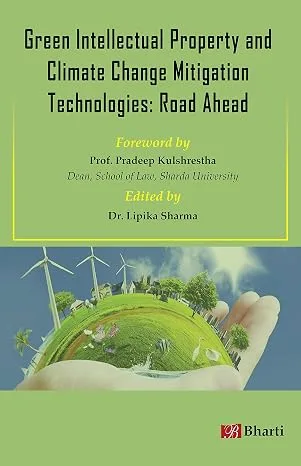
Green Intellectual Property and Climate Change Mitigation Technologies: Road Ahead
Hardcover
• 180 Pages
• inr 660.00
• English
• 978-93-90818-80-8
No ratings yet
| Publisher | Bharti Publications |
|---|---|
| Brand/Group | Bharti Publications |
| ISBN13 | 978-93-90818-80-8 |
| ASIN/SKU | 939081880X |
| Book Format | Hardcover |
| Language | English |
| Pages | 180 |
| List Price | inr 660.00 |
| Publishing Date | 17/06/2021 |
| Dimensions | 14 x 2 x 21.5 |
| Weight | 375 |
| Book Code | BD00070511 |
Buy this Book
Amazon Stores
Ebook Stores
Other Stores
Discover Green Intellectual Property and Climate Change Mitigation Technologies: Road Ahead by Dr. Lipika Sharma. This book is published by Bharti Publications in Hardcover format, ISBN 978-93-90818-80-8, ASIN 939081880X.
Book Description
With the growth of the civilization, industrial and technological advancement there is depletion of the limited amount of non-renewable natural resources. Hence due to constant rise in use of carbon-based energy sources and considering the infinite global energy demand it is estimated that life will be at the verge of extinction in near future. In view of this there is eminent danger of climate change which has capabilities to transform life on planet earth for all times to come. This calls for moving towards green technologies which will bring growth in a sustainable manner. Hence it is necessary to conserve the limited natural resources for continuous survival and sustainable development of humanity. Green energy is unquestionably seen as an answer to the global climate change. To have innovation in the area to create green technology and to get protection under intellectual property regime is a daunting task. As a result, only a collective efforts, commitment and co-operation at international level would be able to guarantee that greenhouse gas emissions are kept under check with the help of new innovative methods which are green in their approach. For continuous survival, going green is not a choice, but a necessity. Green technology refers to environment friendly or clean technology like generation of energy from solar panels, windmills etc. In the present scenario it has been aptly stated that We have not inherited this earth from our forefathers; we have borrowed it from our children. This book is an endeavor to throw light on international efforts around developing and ulitising green intellectual property to mitigate climate change.
Author Biography
Author Biography will be added soon…
Editorial Reviews
Editorial Reviews will be added soon…
Book Summary
The rapid growth of civilisation, industrialisation, and technological advancement has placed unprecedented pressure on the planet’s limited natural resources. The continued dependence on non-renewable, carbon-based energy sources, coupled with rising global energy demands, has intensified concerns surrounding environmental degradation and climate change. The consequences of these developments have the potential to fundamentally transform life on Earth, making sustainable development and resource conservation essential for the continued survival and well-being of humanity.
In this context, the transition towards green technologies and renewable energy has emerged as an important pathway to achieving sustainable growth. Technologies based on clean and renewable sources, such as solar and wind energy, offer significant opportunities to reduce dependence on fossil fuels and mitigate greenhouse gas emissions. However, developing innovative green technologies is only one part of the challenge. Ensuring adequate legal protection for such innovations through the intellectual property regime presents equally significant questions.
This book examines the intersection of climate change, green technology, and intellectual property rights, with particular emphasis on international efforts to promote innovation and facilitate the development and utilisation of environmentally sustainable technologies. Intellectual property protection can provide incentives for technological innovation, but questions concerning accessibility, technology transfer, affordability, and equitable distribution remain critical, particularly in the context of global climate action.
The book highlights the need for greater international cooperation, collective commitment, and coordinated policy approaches to address climate change effectively. Since environmental challenges transcend national boundaries, individual countries cannot tackle them in isolation. Meaningful progress requires collaborative efforts to encourage research and innovation, facilitate the transfer of green technologies, strengthen legal frameworks, and ensure that intellectual property systems contribute constructively to global environmental objectives.
The concept of green intellectual property therefore assumes growing significance. It represents an opportunity to align innovation and intellectual property protection with the broader goals of environmental sustainability. At the same time, it raises important legal and policy considerations regarding how intellectual property rights can encourage technological advancement without creating unnecessary barriers to the widespread adoption of environmentally beneficial technologies.
The book seeks to illuminate the international initiatives and legal developments surrounding the creation, protection, and utilisation of green intellectual property as a means of addressing climate change. It underscores the principle that sustainable development is not merely an option for the future but an immediate necessity. The transition towards greener technologies requires a balance between economic growth, technological innovation, environmental protection, and the responsible use of natural resources.
Ultimately, the book presents a compelling examination of how intellectual property law and international cooperation can contribute to the global response to climate change. It reinforces the idea that the Earth is not merely a resource inherited from previous generations, but a shared responsibility towards future generations. By encouraging innovation, strengthening international collaboration, and promoting sustainable technologies, green intellectual property can become an important instrument in building a cleaner, more sustainable, and resilient future.
In this context, the transition towards green technologies and renewable energy has emerged as an important pathway to achieving sustainable growth. Technologies based on clean and renewable sources, such as solar and wind energy, offer significant opportunities to reduce dependence on fossil fuels and mitigate greenhouse gas emissions. However, developing innovative green technologies is only one part of the challenge. Ensuring adequate legal protection for such innovations through the intellectual property regime presents equally significant questions.
This book examines the intersection of climate change, green technology, and intellectual property rights, with particular emphasis on international efforts to promote innovation and facilitate the development and utilisation of environmentally sustainable technologies. Intellectual property protection can provide incentives for technological innovation, but questions concerning accessibility, technology transfer, affordability, and equitable distribution remain critical, particularly in the context of global climate action.
The book highlights the need for greater international cooperation, collective commitment, and coordinated policy approaches to address climate change effectively. Since environmental challenges transcend national boundaries, individual countries cannot tackle them in isolation. Meaningful progress requires collaborative efforts to encourage research and innovation, facilitate the transfer of green technologies, strengthen legal frameworks, and ensure that intellectual property systems contribute constructively to global environmental objectives.
The concept of green intellectual property therefore assumes growing significance. It represents an opportunity to align innovation and intellectual property protection with the broader goals of environmental sustainability. At the same time, it raises important legal and policy considerations regarding how intellectual property rights can encourage technological advancement without creating unnecessary barriers to the widespread adoption of environmentally beneficial technologies.
The book seeks to illuminate the international initiatives and legal developments surrounding the creation, protection, and utilisation of green intellectual property as a means of addressing climate change. It underscores the principle that sustainable development is not merely an option for the future but an immediate necessity. The transition towards greener technologies requires a balance between economic growth, technological innovation, environmental protection, and the responsible use of natural resources.
Ultimately, the book presents a compelling examination of how intellectual property law and international cooperation can contribute to the global response to climate change. It reinforces the idea that the Earth is not merely a resource inherited from previous generations, but a shared responsibility towards future generations. By encouraging innovation, strengthening international collaboration, and promoting sustainable technologies, green intellectual property can become an important instrument in building a cleaner, more sustainable, and resilient future.
Sample Chapters
Sample Chapters will be added soon…
Reader Reviews
No reviews yet.
Green Intellectual Property and Climate Change Mitigation Technologies: Road Ahead
Download Cover Image
Do you want to download the full cover image for Green Intellectual Property and Climate Change Mitigation Technologies: Road Ahead?