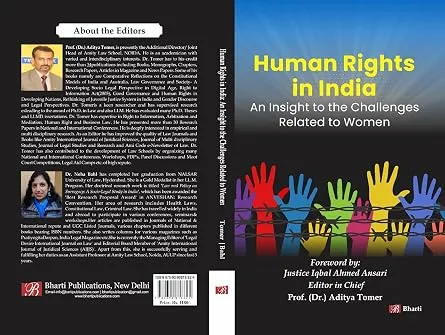
Human Rights in India: An Insight to the Challenges Related to Women
Prof. (Dr.) Aditya Tomer, Dr. Neha Bahl
Hardcover
• 243 Pages
• inr 1180.00
• English
• 978-93-90818-62-4
No ratings yet
| Publisher | Bharti Publications |
|---|---|
| Brand/Group | Bharti Publications |
| ISBN13 | 978-93-90818-62-4 |
| ASIN/SKU | 9390818621 |
| Book Format | Hardcover |
| Language | English |
| Pages | 243 |
| List Price | inr 1180.00 |
| Publishing Date | 25/05/2021 |
| Dimensions | 15.5 x 2 x 23.75 |
| Weight | 550 |
| Book Code | BD00070578 |
Buy this Book
Amazon Stores
Ebook Stores
Other Stores
Discover Human Rights in India: An Insight to the Challenges Related to Women by Prof. (Dr.) Aditya Tomer. This book is published by Bharti Publications in Hardcover format, ISBN 978-93-90818-62-4, ASIN 9390818621.
Book Description
The book titled “Human Rights in India: An Insight to the Challenges related to Women”, an attempt has been made to comment upon and explain the various human rights issues related with women. This book is an encounter to give a comparative law which can be used by judges to survey legal developments in similarly situated jurisdictions, lawyers in advising their clients on cross-border matters, and international organisations to promote legal reforms to strengthen the rule of law and human rights. This book aims to provide a platform for discussion on the said themes which include Triple Talaq and the Constitution of India, Acid Attack, Sex Selection and Abortion, Reproductive Rights of Women in India, Prevention of Women from Sexual Offences, Inequality in Education and Employment for Women, Mental Health of Women, Legal Rights of Surrogates in India, Honour Killing, Human Rights of Women in the Tribal areas of India and many more.
Author Biography
Author Biography will be added soon…
Editorial Reviews
Editorial Reviews will be added soon…
Book Summary
Human Rights in India: An Insight into the Challenges Related to Women explores the complex and diverse human rights issues faced by women in India. The book examines the legal, social, constitutional, cultural, and institutional challenges that continue to influence women's rights, dignity, equality, freedom, and access to justice. It seeks to provide readers with a deeper understanding of the legal framework surrounding women's rights while highlighting areas where further reform and effective implementation are required.
Women’s human rights are an integral part of the broader human rights framework and are closely connected with the principles of equality, non-discrimination, liberty, dignity, and social justice. Despite significant constitutional and legislative developments, women in India continue to encounter numerous challenges in their personal, social, educational, professional, and reproductive lives. This book brings together discussions on several such contemporary issues and provides a platform for examining them from a legal and human rights perspective.
A significant feature of the book is its comparative law perspective. Comparative legal analysis can help judges examine legal developments in similarly situated jurisdictions, assist lawyers in addressing cross-border legal matters, and support international organisations in promoting legal reforms aimed at strengthening the rule of law and protecting human rights. By placing Indian legal issues within a wider comparative framework, the book encourages readers to understand how different legal systems respond to challenges concerning women's rights and how such experiences may contribute to the development of effective legal mechanisms in India.
The book addresses a wide range of important and sensitive themes. These include Triple Talaq and the Constitution of India, acid attacks, sex selection and abortion, reproductive rights of women, prevention of sexual offences against women, inequality in education and employment, women's mental health, legal rights of surrogates, honour killings, and the human rights of women in tribal areas of India, among several other issues.
The discussion of Triple Talaq considers the intersection of personal law, constitutional principles, gender equality, and women's rights. Similarly, the examination of acid attacks highlights the severe physical, psychological, social, and legal consequences faced by survivors and the need for effective legal protection and rehabilitation.
Issues concerning sex selection, abortion, and reproductive rights are examined in the context of women's autonomy, dignity, healthcare, and legal protection. The book also addresses sexual offences against women and considers the importance of effective laws, institutional mechanisms, awareness, and access to justice in preventing violence and protecting survivors.
Another important area explored is the continuing inequality experienced by women in education and employment. Equal access to educational and professional opportunities is essential for empowerment and social development, yet structural and societal barriers continue to affect women's participation and advancement. The book also draws attention to women's mental health, an area that is often overlooked in discussions of human rights, despite its close connection with dignity, well-being, equality, and quality of life.
The legal rights of surrogates in India represent another complex area where questions of reproductive autonomy, exploitation, consent, healthcare, and legal protection intersect. Likewise, the discussion of honour killing and the human rights of women in tribal areas highlights how social customs, community structures, vulnerability, and access to legal institutions can influence women's ability to exercise their fundamental rights.
Overall, the book seeks to create an academic and intellectual platform for discussing contemporary challenges relating to women's human rights in India. It combines legal analysis with broader social concerns and emphasises the importance of effective laws, judicial interpretation, institutional mechanisms, and social awareness in advancing gender justice.
This book will be valuable for law students, legal practitioners, judges, researchers, academicians, policymakers, human rights organisations, and readers interested in women's rights and social justice. It contributes to the ongoing discourse on strengthening legal protection for women and promoting a society based on equality, dignity, justice, and respect for human rights.
Women’s human rights are an integral part of the broader human rights framework and are closely connected with the principles of equality, non-discrimination, liberty, dignity, and social justice. Despite significant constitutional and legislative developments, women in India continue to encounter numerous challenges in their personal, social, educational, professional, and reproductive lives. This book brings together discussions on several such contemporary issues and provides a platform for examining them from a legal and human rights perspective.
A significant feature of the book is its comparative law perspective. Comparative legal analysis can help judges examine legal developments in similarly situated jurisdictions, assist lawyers in addressing cross-border legal matters, and support international organisations in promoting legal reforms aimed at strengthening the rule of law and protecting human rights. By placing Indian legal issues within a wider comparative framework, the book encourages readers to understand how different legal systems respond to challenges concerning women's rights and how such experiences may contribute to the development of effective legal mechanisms in India.
The book addresses a wide range of important and sensitive themes. These include Triple Talaq and the Constitution of India, acid attacks, sex selection and abortion, reproductive rights of women, prevention of sexual offences against women, inequality in education and employment, women's mental health, legal rights of surrogates, honour killings, and the human rights of women in tribal areas of India, among several other issues.
The discussion of Triple Talaq considers the intersection of personal law, constitutional principles, gender equality, and women's rights. Similarly, the examination of acid attacks highlights the severe physical, psychological, social, and legal consequences faced by survivors and the need for effective legal protection and rehabilitation.
Issues concerning sex selection, abortion, and reproductive rights are examined in the context of women's autonomy, dignity, healthcare, and legal protection. The book also addresses sexual offences against women and considers the importance of effective laws, institutional mechanisms, awareness, and access to justice in preventing violence and protecting survivors.
Another important area explored is the continuing inequality experienced by women in education and employment. Equal access to educational and professional opportunities is essential for empowerment and social development, yet structural and societal barriers continue to affect women's participation and advancement. The book also draws attention to women's mental health, an area that is often overlooked in discussions of human rights, despite its close connection with dignity, well-being, equality, and quality of life.
The legal rights of surrogates in India represent another complex area where questions of reproductive autonomy, exploitation, consent, healthcare, and legal protection intersect. Likewise, the discussion of honour killing and the human rights of women in tribal areas highlights how social customs, community structures, vulnerability, and access to legal institutions can influence women's ability to exercise their fundamental rights.
Overall, the book seeks to create an academic and intellectual platform for discussing contemporary challenges relating to women's human rights in India. It combines legal analysis with broader social concerns and emphasises the importance of effective laws, judicial interpretation, institutional mechanisms, and social awareness in advancing gender justice.
This book will be valuable for law students, legal practitioners, judges, researchers, academicians, policymakers, human rights organisations, and readers interested in women's rights and social justice. It contributes to the ongoing discourse on strengthening legal protection for women and promoting a society based on equality, dignity, justice, and respect for human rights.
Sample Chapters
Sample Chapters will be added soon…
Reader Reviews
No reviews yet.
Human Rights in India: An Insight to the Challenges Related to Women
Download Cover Image
Do you want to download the full cover image for Human Rights in India: An Insight to the Challenges Related to Women?