
CITIZEN EMPOWERMENT: A STUDY OF E-GOVERNANCE SERVICES
Dr. Rajeev Bansal, Dr. Manoj Sharma
Hardcover
• 208 Pages
• inr 325.00
• English
• 978-93-89657-92-0
No ratings yet
| Publisher | Bharti Publications |
|---|---|
| Brand/Group | Bharti Publications |
| ISBN13 | 978-93-89657-92-0 |
| ASIN/SKU | 938965792X |
| Book Format | Hardcover |
| Language | English |
| Pages | 208 |
| List Price | inr 325.00 |
| Publishing Date | 10/11/2020 |
| Dimensions | 14.5 x 2 x 21.5 |
| Weight | 325 |
| Book Code | BD00070665 |
Buy this Book
Amazon Stores
Ebook Stores
Other Stores
Discover CITIZEN EMPOWERMENT: A STUDY OF E-GOVERNANCE SERVICES by Dr. Rajeev Bansal. This book is published by Bharti Publications in Hardcover format, ISBN 978-93-89657-92-0, ASIN 938965792X.
Book Description
The delivery of services to citizens through e-governance tools has recorded remarkable progress in the past few years. The Government of Himachal Pradesh has been a pioneer in the country for many such initiatives. The real essence of the e-governance rests in the percolation to the common people, especially those residing in rural areas for their routine affairs of life to reduce the foot fall in offices. This study has been undertaken to assess the delivery of services to the citizens of H.P. Besides this, the study takes into account the preparedness and opinion of officials in different aspects in different aspects for being instrumental to provide the services. The results present a factual position prevailing at the grassroot level with the contrast of rural and urban areas. The suggestions pave way for the policy makers for process re-engineering in the formulation of policies for efficient, reliable and time bound service delivery to the common man for the establishment of the regime of citizen centric administration.
Author Biography
Author Biography will be added soon…
Editorial Reviews
Editorial Reviews will be added soon…
Book Summary
E-Governance and Citizen-Centric Service Delivery in Himachal Pradesh
E-governance has emerged as an important instrument for transforming the delivery of public services and strengthening the relationship between citizens and government. By using digital technologies, governments can make services more accessible, transparent, efficient, reliable, and time-bound. In recent years, the delivery of public services through e-governance tools has witnessed significant progress in India, with the Government of Himachal Pradesh playing a pioneering role in implementing several innovative initiatives.
This book presents a comprehensive study of e-governance and its effectiveness in delivering public services to citizens in Himachal Pradesh. The central focus of the study is to examine whether the benefits of digital governance have actually reached ordinary citizens, particularly those living in rural and geographically remote areas. The success of e-governance ultimately depends not merely on the availability of digital platforms and technological infrastructure, but on their effective use by citizens in their routine interactions with government departments.
A major objective of the study is to assess the accessibility, effectiveness, reliability, and timeliness of various e-governance services available to the people of Himachal Pradesh. It examines the extent to which digital service delivery has reduced the need for citizens to visit government offices and has simplified administrative procedures. Particular attention is given to the differences between rural and urban areas, thereby highlighting the realities and challenges faced by citizens at the grassroots level.
The book also examines the preparedness, perceptions, and opinions of government officials who are directly involved in providing e-governance services. Their perspectives are important for understanding the administrative, technological, and procedural factors that influence effective digital service delivery. The study therefore considers both sides of the governance process—the experiences of citizens and the preparedness of public officials.
The findings provide a factual assessment of the prevailing situation and reveal important contrasts between rural and urban populations. They highlight areas where e-governance initiatives have made meaningful contributions while also identifying gaps that may limit their effectiveness. Issues relating to accessibility, awareness, infrastructure, administrative processes, and the capacity of citizens and officials to use digital services are considered in understanding the overall performance of e-governance.
An important contribution of the book is its emphasis on citizen-centric administration. It argues that technological advancement alone cannot guarantee effective governance. Digital systems must be designed around the needs, capabilities, and experiences of citizens. Simplifying procedures, improving accessibility, strengthening digital infrastructure, increasing awareness, and making services more responsive are essential for ensuring that e-governance genuinely benefits the common people.
The suggestions presented in the study provide useful directions for policymakers, administrators, and practitioners. They emphasize the need for process re-engineering, institutional strengthening, improved service mechanisms, and greater responsiveness in the formulation and implementation of e-governance policies. Such reforms can help create a more efficient, reliable, transparent, and time-bound system of public service delivery.
Overall, this book offers valuable insights into the practical functioning of e-governance in Himachal Pradesh and its role in transforming traditional administrative practices. By bringing together the perspectives of citizens and government officials and comparing rural and urban experiences, the study provides a meaningful foundation for improving digital governance. It will be useful for researchers, students, policymakers, administrators, and anyone interested in e-governance, public administration, digital transformation, and citizen-centric service delivery in India.
E-governance has emerged as an important instrument for transforming the delivery of public services and strengthening the relationship between citizens and government. By using digital technologies, governments can make services more accessible, transparent, efficient, reliable, and time-bound. In recent years, the delivery of public services through e-governance tools has witnessed significant progress in India, with the Government of Himachal Pradesh playing a pioneering role in implementing several innovative initiatives.
This book presents a comprehensive study of e-governance and its effectiveness in delivering public services to citizens in Himachal Pradesh. The central focus of the study is to examine whether the benefits of digital governance have actually reached ordinary citizens, particularly those living in rural and geographically remote areas. The success of e-governance ultimately depends not merely on the availability of digital platforms and technological infrastructure, but on their effective use by citizens in their routine interactions with government departments.
A major objective of the study is to assess the accessibility, effectiveness, reliability, and timeliness of various e-governance services available to the people of Himachal Pradesh. It examines the extent to which digital service delivery has reduced the need for citizens to visit government offices and has simplified administrative procedures. Particular attention is given to the differences between rural and urban areas, thereby highlighting the realities and challenges faced by citizens at the grassroots level.
The book also examines the preparedness, perceptions, and opinions of government officials who are directly involved in providing e-governance services. Their perspectives are important for understanding the administrative, technological, and procedural factors that influence effective digital service delivery. The study therefore considers both sides of the governance process—the experiences of citizens and the preparedness of public officials.
The findings provide a factual assessment of the prevailing situation and reveal important contrasts between rural and urban populations. They highlight areas where e-governance initiatives have made meaningful contributions while also identifying gaps that may limit their effectiveness. Issues relating to accessibility, awareness, infrastructure, administrative processes, and the capacity of citizens and officials to use digital services are considered in understanding the overall performance of e-governance.
An important contribution of the book is its emphasis on citizen-centric administration. It argues that technological advancement alone cannot guarantee effective governance. Digital systems must be designed around the needs, capabilities, and experiences of citizens. Simplifying procedures, improving accessibility, strengthening digital infrastructure, increasing awareness, and making services more responsive are essential for ensuring that e-governance genuinely benefits the common people.
The suggestions presented in the study provide useful directions for policymakers, administrators, and practitioners. They emphasize the need for process re-engineering, institutional strengthening, improved service mechanisms, and greater responsiveness in the formulation and implementation of e-governance policies. Such reforms can help create a more efficient, reliable, transparent, and time-bound system of public service delivery.
Overall, this book offers valuable insights into the practical functioning of e-governance in Himachal Pradesh and its role in transforming traditional administrative practices. By bringing together the perspectives of citizens and government officials and comparing rural and urban experiences, the study provides a meaningful foundation for improving digital governance. It will be useful for researchers, students, policymakers, administrators, and anyone interested in e-governance, public administration, digital transformation, and citizen-centric service delivery in India.
Sample Chapters
Sample Chapters will be added soon…
Reader Reviews
No reviews yet.
CITIZEN EMPOWERMENT: A STUDY OF E-GOVERNANCE SERVICES
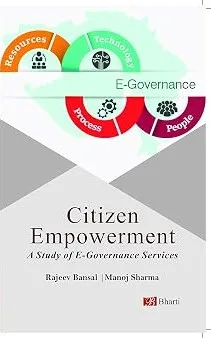
Download Cover Image
Do you want to download the full cover image for CITIZEN EMPOWERMENT: A STUDY OF E-GOVERNANCE SERVICES?